
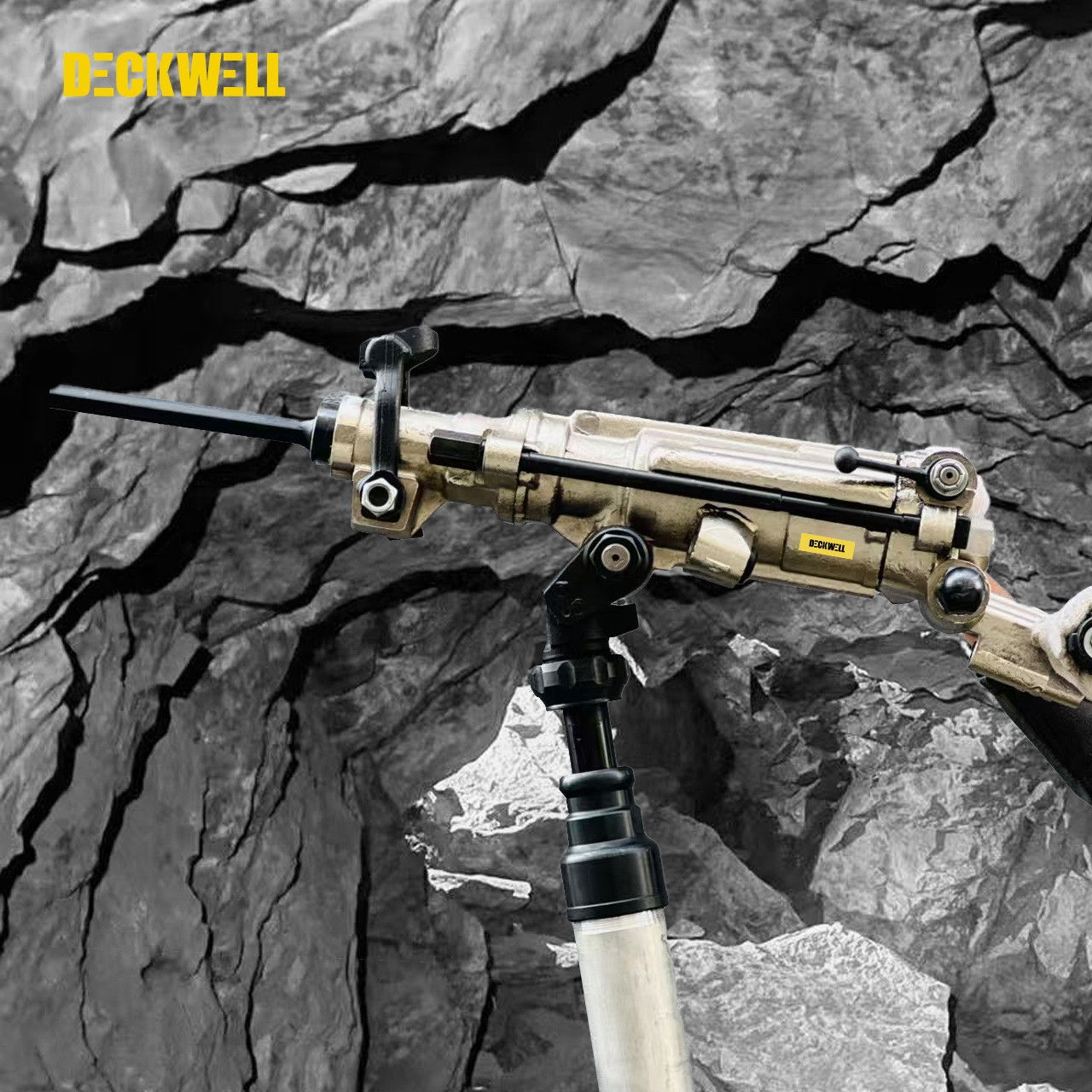
Understanding Mining Enterprise Compliance Requirements for Air Leg Rock Drills
Key regulatory standards: ISO 8535, MSHA, and national mining safety mandates
When it comes to air leg rock drills used in mining operations, there's no getting around the fact that they need to meet all sorts of different rules from around the world, federal laws, and local regulations too. The ISO 8535 standard serves as kind of the base line for these pneumatic rock drills. It sets limits on how much vibration workers can be exposed to, maxing out at 2.5 m/s squared for their hands and arms. Noise levels also get capped at 115 dB(A) to protect miners' hearing over time. Down here in the US, MSHA has its own strict rules under Part 75, especially when working underground. These include things like using materials that won't catch fire easily, making sure electrical parts are safe in dangerous areas, and having proper emergency stop features that actually work. Other countries aren't far behind either. Australia rolled out their Mine Safety and Health Regulations back in 2022, while Canada has similar requirements in their Occupational Health and Safety Code. Both countries require weekly checks on the mechanical condition of equipment and constant monitoring during operation for tools considered high risk, including those air leg drills. Failing to follow these rules isn't just bad practice either. Last year alone, MSHA was handing out fines upwards of $100k for each violation discovered. Companies that keep breaking the same rules end up facing shutdown orders until everything gets fixed properly. That means getting certified before deploying any new equipment and staying ready for audits at all times.
Operational performance thresholds: thrust, torque, air efficiency, and 24/7 durability in abrasive conditions
Just meeting regulations isn't enough when it comes to air leg rock drills for serious operations. These machines need to keep performing at their best even when pushed through tough conditions. The thrust force should stay steady somewhere around 500 to 1,500 kgf as they work through different layers of rock, making sure the drill bit stays engaged without stopping mid-job. Torque needs to hang out between 40 and 80 Nm range to stop jams in broken rocks or layered formations, but also protect the drive train from getting overstressed. When talking about air efficiency, we measure how much air (in cubic feet per minute) gets used for each foot drilled. This matters a lot for both costs and environmental impact. Better models today use about 30 to 40 percent less air compared to older equipment, which means compressors don't have to work so hard and produce fewer emissions overall. If these drills are going to run all day every day in dusty environments where there's at least 10 mg per cubic meter of particles floating around, then they need really tough wear surfaces made from hardened tungsten carbide plus bearings that are sealed three times over and lubricated with grease. Testing shows that good quality units maintain over 95 percent functionality after running for 2,000 hours straight in simulated iron ore dust conditions. That's way better than regular alternatives that barely hit 65 percent after similar testing, proving why specialized equipment makes sense for top tier continuous operation sites.
Top Validated Air Leg Rock Drills Meeting Enterprise Standards
Atlas Copco COP 1238: Proven reliability in Tier-1 iron ore operations (98.2% uptime)
The Atlas Copco COP 1238 stands out as a top performer in the field, clocking in at around 98.2% uptime according to recent tests conducted at three big iron ore mining locations (Mining Efficiency Report, 2023). What makes this drill so reliable? The build quality speaks volumes. Hardened seals and robust bearings stand up to wear and tear from long hours on site. Even when conditions get tough, the machine maintains stable performance levels despite changes in temperature or pressure. This reliability means operators can stay within those strict ISO 8535 standards for vibrations and noise without constant adjustments. Plus, following MSHA requirements becomes much easier with regular maintenance schedules built right into the system. Standardized parts and easy replacements cut down on downtime and repair costs. Over five years, companies save approximately 22% on overall expenses compared to traditional air leg drills. No wonder it's becoming the go-to choice for large scale operations where regulatory compliance matters most.
Furukawa RH550E: Optimized air leg rock drill performance in hard granite—penetration rate vs. consumption trade-offs
When working through those really tough granite formations, the Furukawa RH550E actually solves what has long been a problem for drillers: getting about 20% better penetration rates while using the same amount of compressed air as standard equipment according to that drilling study from last year. What makes this possible? Well, the machine's smart control system adjusts both airflow and how often it impacts the rock based on what the drill bit is experiencing right then. This keeps things running smoothly without wasting extra air. Because of this fine tuning, parts last longer when dealing with abrasive materials and overall energy consumption drops somewhere between 15 and 18 percent. Plus, it ticks all the boxes for safety regulations too. The RH550E passes MSHA's flame resistance tests and stays within ISO 8535 vibration limits even when pushing maximum thrust power, no need for additional damping systems either. Real world testing in Canadian Shield quarries shows just how effective this kind of focused engineering can be when trying to boost productivity while still meeting strict safety rules and environmental concerns.
Future-Ready Compliance: Smart Monitoring and Predictive Maintenance in Modern Air Leg Rock Drills
The latest air leg rock drills now come equipped with IoT sensors and edge computing capabilities that turn compliance checking from something done once a year into an ongoing process backed by actual data. These machines have built-in accelerometers, pressure sensors, and temperature monitors that keep tabs on vibrations, air pressure consistency, and how hot the bearings get in real time. They can spot problems early on, like tiny leaks around seals or when lubricants start breaking down, long before these issues become full blown failures. The AI systems running behind the scenes look at all this information to predict when parts might wear out, so technicians know exactly when to replace them during regular maintenance instead of dealing with sudden breakdowns mid-shift. Companies using these smart drills report cutting unexpected downtime by almost half in many cases. Plus, the equipment stays within required performance levels for thrust force and air usage according to both ISO 8535 standards and MSHA regulations throughout their entire work cycles.
With remote telemetry technology, drill operators can now control operations from surface control centers or even remote locations outside the mine site. This cuts down on worker exposure to those damp, humid areas underground where there might be stability issues in the rock formations. The system also keeps track of everything automatically - from day to day operations right through maintenance checkups and equipment calibrations. All these digital records make it much easier when going through audits required by organizations like MSHA and ISO standards bodies. Nobody has to spend hours reconstructing paper records anymore. And looking at what's happening with regulation changes lately, especially after MSHA released their Tech Advisory Bulletin 2024-03 about smart equipment reporting, these monitoring systems aren't just helping companies stay compliant anymore. They're actually setting the standard for what counts as serious industrial implementation across the board.
| Compliance Advantage | Operational Impact |
|---|---|
| Real-time anomaly detection | Prevents catastrophic failures in high-vibration environments |
| Predictive component replacement | Extends drill lifespan in abrasive rock conditions |
| Remote operational logs | Simplifies MSHA/ISO audit documentation |
By transforming sensor data into prescriptive maintenance actions and verifiable compliance evidence, intelligent air leg rock drills future-proof mining operations—ensuring safety, sustainability, and productivity evolve in tandem.
FAQ Section
What is the ISO 8535 standard?
ISO 8535 is an international standard for pneumatic rock drills, setting limits on worker exposure to vibration and noise to ensure safety and compliance in mining operations.
Why is MSHA compliance important for air leg rock drills?
MSHA compliance is crucial because it involves meeting safety standards and regulations set for mines, especially when working underground, to prevent hazards and ensure worker safety.
What are the operational performance thresholds for air leg rock drills?
The performance thresholds include maintaining thrust force between 500 to 1,500 kgf, torque between 40 and 80 Nm, and air efficiency to reduce costs and environmental impact while ensuring durability in abrasive conditions.
How do smart monitoring and predictive maintenance enhance drill performance?
IoT sensors and predictive maintenance allow real-time monitoring and early detection of potential issues, reducing unexpected downtime and extending the drill's lifespan while ensuring continuous compliance with safety standards.