
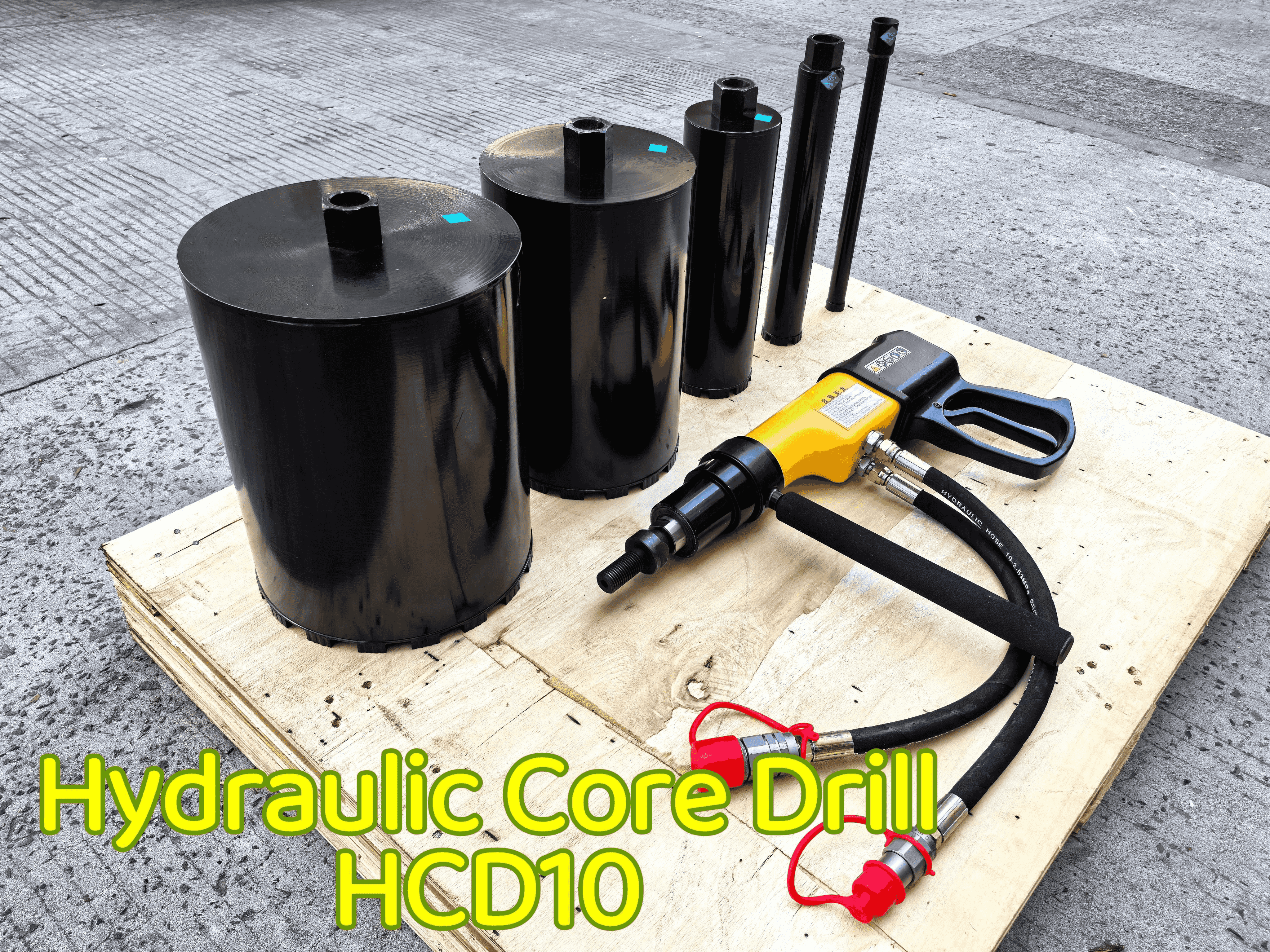
How Hydraulic Core Drills Enhance Geological Sampling Efficiency
What Makes Hydraulic Core Drills Ideal for Rock and Soil Sampling?
Hydraulic core drills really stand out when it comes to geological sampling because they can handle all sorts of different rock hardness levels and varying soil density without missing a beat. Mechanical systems just don't cut it in tough conditions where the ground is wearing down equipment fast. The hydraulic system keeps delivering steady power through those rough spots, which means samples break apart way less than with air-powered tools something like 30 to 40 percent less fragmentation according to field tests. What makes these drills so valuable is their automated pressure control feature. This lets them extract cores cleanly from complex layers of earth without messing up the order of sediments, which matters a lot for proper geological analysis back at the lab.
The Role of Hydraulic Power in Precision and Depth Control
The hydraulic system makes it possible to fine tune both RPM and feed force settings, which keeps the drill bit properly engaged even when going down past 500 meters underground. This really matters in areas with brittle shale formations or fractured granite rock layers, because traditional manual drilling equipment tends to produce skewed sample results in these conditions. With real time pressure monitoring that can be adjusted anywhere from 5 to 25 MPa, field operators don't have to stop work every time they hit an unexpected change in rock density. The ability to make quick adjustments on site gives exploration teams a major edge when working against tight deadlines for geological surveys and resource assessments.
Core Drilling Machine Components That Maximize Sampling Reliability
Modern hydraulic core rigs integrate three critical subsystems:
- Diamond-impregnated bit assemblies engineered for 90%+ core recovery in quartzite and basalt
- Vibration-dampened feed systems that reduce sample disturbance by 60% in unconsolidated sediments
- Modular coolant circulation preventing thermal degradation of organic-rich cores
These innovations collectively reduce laboratory rejection rates by up to 55% compared to conventional drills, as validated in 2023 field trials across six major mining basins.
Core Drilling Methods Compared for Geological Exploration Applications
Rotary Core Drilling: The Standard for High-Quality Geological Samples
Rotary core drilling is the gold standard in mineral exploration due to its unmatched sample integrity. Industrial diamond-tipped bits penetrate hard rock formations up to 1,500 meters while preserving geological structures. Innovations like wireline coring systems reduce retrieval times by 40%, minimizing core disruption during extraction and improving operational efficiency.
Evaluating Core Barrel Integration in Hydraulic Drilling Systems
Hydraulic core drills leverage pressurized fluid dynamics to optimize core barrel performance. Advanced swivel-head designs maintain 98% core recovery rates (Ponemon 2023) in fractured formations by automatically adjusting rotational torque. Dual-wall barrel configurations prevent contamination when drilling through water-saturated strata, ensuring representative samples from complex hydrogeological environments.
Field Performance: Hydraulic vs. Other Drilling Techniques in Diverse Formations
| Technique | Max Depth (m) | Core Recovery Rate (%) | Formation Versatility |
|---|---|---|---|
| Hydraulic | 1,500 | 98 (Ponemon 2023) | High |
| Electric | 800 | 92 | Moderate |
| Pneumatic | 300 | 85 | Low |
A South American copper project demonstrated hydraulic systems’ superiority, achieving 50% faster penetration in quartzite compared to electric rigs while maintaining 96% sample viability—essential for accurate resource modeling.
Overcoming Site-Specific Challenges with Adaptive Core Sampling Strategies
Operators working with hydraulic drills tackle the challenges of karst terrain by relying on real time pressure sensors that spot those tricky cavity zones before anything gets lost downhole. The rigs themselves are built with modular setups so crews can switch out bits quickly from diamond impregnated ones to surface set types whenever they hit unexpected rock hardness changes mid operation. And let's not forget about those automated mud injection systems either these bad boys stop around 85 percent of all borehole collapses when dealing with loose sediments as shown in recent field tests back in 2024. Makes a huge difference on site where downtime costs money and safety is always paramount.
Types of Core Drilling Machines: Why Hydraulic Excels in Mineral Exploration
Hydraulic core drills dominate mineral exploration due to their unmatched adaptability to demanding geological conditions. A 2023 industry report revealed hydraulic systems achieve 92% core recovery rates in fractured rock formations, outperforming electric (78%) and pneumatic (82%) alternatives.
Hydraulic vs. Electric vs. Pneumatic: Performance Breakdown for Geological Use
- Hydraulic systems leverage pressurized fluid for continuous torque delivery, excelling in deep (>300m) and dense formations like basalt or quartzite.
- Electric drills struggle with heat dissipation during prolonged operations, while pneumatic tools lose efficiency at depths beyond 150m due to air compression limitations.
Key Features of Modern Hydraulic Core Drills for Consistent Core Recovery
Advanced pressure-compensation systems prevent core fragmentation in unstable strata, and modular designs enable quick adaptation between diamond-tipped and impregnated bits. Dual-speed gearboxes help operators maintain optimal RPM whether drilling through soft shale or granite.
Real-World Deployment: Field Examples from Active Exploration Sites
In a copper-rich porphyry deposit, hydraulic rigs drilled 40% faster than electric counterparts while maintaining >90% core integrity. Arctic exploration teams increasingly favor hydraulic systems for their cold-weather reliability, with one operation logging 1,200m of continuous core samples at -40°C.
Debating the Value: Are Hydraulic Systems Overengineered for Shallow Sampling?
While hydraulic power offers diminishing returns in shallow (<50m) sedimentary layers, its precision in orienting core samples reduces laboratory reinterpretation costs by 27% (Geological Survey Data 2022). The ability to transition seamlessly between deep and shallow targets justifies their widespread adoption across diverse exploration programs.
Industry Applications: Hydraulic Core Drills in Mining and Large-Scale Exploration
Why the Mining Sector Favors Hydraulic Core Drilling Equipment
In today's mines, hydraulic core drills have become the go to equipment for most operators because they pack serious power into compact designs and work reliably even when conditions get rough. According to recent industry numbers from 2024, around two thirds of all mining sites rely on these drills for taking samples, mainly because they can generate massive torque forces reaching up to 3,200 Newton meters while maintaining fine control over pressure adjustments. What really stands out is how well they perform in tough rock formations. Field tests show these systems recover nearly all the core material (about 98%) from broken or fractured ore deposits, which beats out older pneumatic models by almost a quarter. This kind of performance makes a big difference in getting accurate geological data without wasting time or resources.
Key advantages driving adoption:
- Continuous drilling force in submerged or high-vibration environments
- Real-time pressure adjustments for transitions between hard rock types (e.g., granite to schist)
- 40% fewer mechanical breakdowns than electric drills in 24/7 operations
Case Study: Copper Exploration Project Using Hydraulic Core Drills
A 2023 copper exploration project in Chile’s Atacama Desert demonstrated hydraulic drills’ superiority, achieving 95% core recovery in mixed volcanic formations compared to 82% with pneumatic systems. The TX-90 hydraulic rigs reached 1,850m depth through alternating andesite and quartzite layers, completing 42% faster than scheduled. Critical success factors included:
- Modular power units enabling rapid adaptation to elevation changes (2,800m to 3,400m ASL)
- Dynamic flow control preventing contamination in hydrothermally altered zones
- Onboard diagnostics reducing downtime by 67% versus conventional drills
Global Trends in Core Drill Adoption Across Major Mining Regions
According to recent industry tracking, there's been around 18 percent yearly growth in deploying hydraulic systems throughout major mining areas worldwide. Down under in Australia's iron ore country, projects get finished about 40% quicker when using hydraulics instead of old school diesel machines, as noted in the 2023 Global Mining Equipment Trends report. Over in Africa's copper region, we've witnessed something pretty remarkable too – almost tripled deployment rates for hydraulic rigs since 2020 started. Meanwhile up north in Canadian diamond mines, they're hitting nearly perfect sample quality even at freezing temperatures of minus 40 degrees Celsius thanks to special thermal compensation in their hydraulic fluids. And let's not forget places like Indonesia where these modular hydraulic setups are making all the difference. The dense jungles that once slowed everything down? Not anymore. These new systems slash site prep expenses by roughly seventy-four thousand dollars for every single kilometer of drilling completed.
Selecting the Right Hydraulic Core Drill for Optimal Data Collection
Matching Drill Rig Capabilities to Geological Formations and Depths
Field tests from 2023 show that hydraulic core drills work about 23% better in mixed rock formations compared to their pneumatic counterparts. When operating these machines, matching the torque output which usually ranges between 1,500 to 4,500 Newton meters depending on the rig with the actual hardness of the formation is really important for good results. The hydraulic system allows much more accurate depth control when taking samples from sedimentary layers that go as deep as 1,200 meters underground. In areas with glacial till, keeping feed pressure under 50 megapascals makes all the difference. This helps avoid those frustrating jams that happen when drilling through loose, unconsolidated material that just doesn't hold together well.
Data-Driven Selection: Core Recovery Rates by Drill Type (Industry Report 2023)
A 12-month study across 147 exploration sites revealed hydraulic systems maintain 98.5% core recovery in granite versus 87.2% for pneumatic rigs. The performance gap widens in unconsolidated formations:
| Formation Type | Hydraulic Recovery Rate | Pneumatic Recovery Rate | Electric Recovery Rate |
|---|---|---|---|
| Hard Rock Granite | 98.5% | 87.2% | 92.1% |
| Loose Alluvial Deposits | 89.7% | 76.4% | 81.9% |
Source: 2023 Geological Equipment Analysis
Future-Proofing Exploration: Smart Hydraulic Rigs with Real-Time Monitoring
The latest generation of hydraulic drill controllers can handle around 120 sensor readings every single second, making real time adjustments to both pressure levels and rotational speed when encountering different types of rock formations. Testing on actual drilling sites has demonstrated that these automated systems cut down core fragmentation issues by roughly 41 percent when working through those tricky alternating layers of shale and limestone that give so many operators headaches. For exploration crews who have adopted cloud based monitoring solutions, there's been some impressive results too. According to recent data collected from 32 operating mines last year, teams detected anomalies within mineral rich areas about 63% quicker than before they implemented this kind of automated system.
Frequently Asked Questions
What are hydraulic core drills used for?
Hydraulic core drills are mainly used for geological sampling, mineral exploration, and collecting rock specimens from deep formations.
Why are hydraulic core drills preferred over electric and pneumatic drills?
Hydraulic core drills are preferred due to their higher core recovery rates, adaptability in varying geological conditions, and efficient torque delivery.
What kind of formations benefit most from hydraulic core drilling?
Hard rock formations like granite and basalt benefit most, along with challenging environments like loose sediments and hydrogeological sites.
How do hydraulic core drills ensure sample integrity?
They utilize advanced pressure control, diamond-impregnated bit assemblies, and modular systems to maintain sample integrity and avoid contamination.
Table of Contents
- How Hydraulic Core Drills Enhance Geological Sampling Efficiency
- Core Drilling Methods Compared for Geological Exploration Applications
- Types of Core Drilling Machines: Why Hydraulic Excels in Mineral Exploration
- Industry Applications: Hydraulic Core Drills in Mining and Large-Scale Exploration
- Selecting the Right Hydraulic Core Drill for Optimal Data Collection
- Frequently Asked Questions