
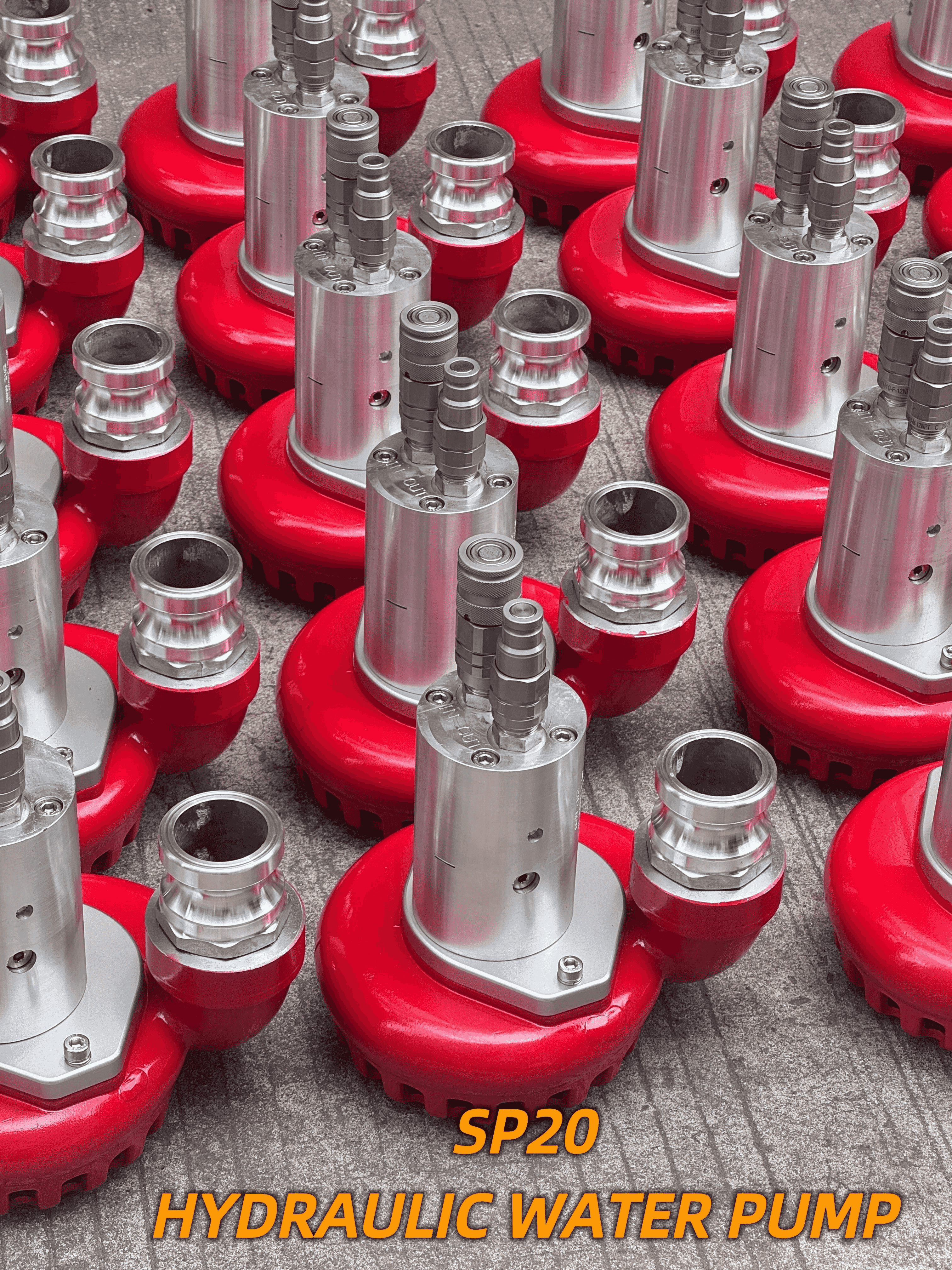
Why Urban Flood Control Demands High-Performance Hydraulic Water Pumps
Flooding in cities can wreak havoc on everything from roads and buildings to local businesses and people's homes. When it comes to fighting back against rising waters, high performance hydraulic water pumps simply cannot be ignored. These pumps can move massive amounts of water fast something that matters a lot because every minute counts when trying to prevent serious damage. Standard electric pumps just don't cut it when there's all sorts of junk floating around in stormwater. Hydraulic systems keep working even when clogged with debris, which makes them far more dependable when the going gets tough and water levels rise rapidly.
Performance gaps carry dire consequences:
- Economic losses average $740k per flood incident (Ponemon Institute, 2023)
- Response delays from inadequate pumping capacity escalate rescue and recovery costs by up to 300%
- Prolonged inundation accelerates infrastructure corrosion, shortening asset lifespans and increasing long-term maintenance burdens
Cities require hydraulic pumps that exceed baseline specifications. Key capabilities include:
| Performance Metric | Minimum Urban Standard |
|---|---|
| Flow Rate | ¥ 15,000 GPM |
| Debris Handling | 3" solids |
| Runtime | 72+ hours continuous |
Substandard equipment fails precisely when it's needed most—during storm drain overflows and basement inundation. Hydraulic systems—mechanical efficiency, debris tolerance, and durability withstand these extremes where conventional pumps falter. Municipalities prioritizing high-flow hydraulic water pumps reduce recovery costs, protect critical infrastructure, and safeguard community resilience.
Key Hydraulic Water Pump Types for Urban Flood Scenarios
Urban flood management requires specialized hydraulic water pump configurations to handle diverse drainage challenges. Selecting the right type prevents infrastructure overload and reduces property damage during extreme weather events.
Submersible hydraulic water pumps: optimal for confined, high-risk zones (e.g., basements, tunnels)
Submersible units operate fully underwater—making them indispensable for basement dewatering, subway tunnels, and underground parking structures. Their sealed, explosion-proof design eliminates electrical hazards while efficiently handling debris-laden water. Corrosion-resistant materials (e.g., duplex stainless steel housings and epoxy-coated internals) ensure longevity in chemically aggressive, sediment-heavy environments.
Axial flow and vertical wet-pit hydraulic water pumps: top choices for low-head, high-volume stormwater removal
Axial flow pumps are really good at handling huge amounts of water, sometimes as much as 50 thousand gallons per minute, but they work best when there isn't much pressure involved, usually below thirty feet head pressure. Because of this characteristic, these pumps find their place in situations like dealing with street floods, managing overflow from retention basins, or even during canal bypass projects. When we look at vertical wet pit setups, they combine those powerful high flow impellers with small physical spaces, which means cities can deploy them quickly even in tight spots where space is limited. What makes both pump types stand out is how they reduce energy waste. The way the water moves through these systems is pretty smooth thanks to their design, and the vanes are shaped just right so nothing gets lost along the way. Engineers love this efficiency because it saves money and keeps things running smoothly over time.
Concrete volute pumps (CVP): heavy-duty hydraulic water pumps for permanent municipal flood infrastructure
CVPs are built specifically for those key discharge locations such as regional pump stations where they need to keep running nonstop thanks to their reinforced concrete volutes and impellers that can stand up to wear and tear. These pumps work on gravity feed principles and handle impressive volumes well beyond 60 thousand gallons per minute, making them essential parts of major urban drainage infrastructure across cities. What makes these systems so cost effective over time? The inclusion of maintenance access ports, sacrificial wear rings, plus modular service components all help cut down on expenses when dealing with the gritty, salty water conditions common in municipal stormwater management.
| Pump Type | Best Application | Flow Capacity | Key Advantage |
|---|---|---|---|
| Submersible | Confined spaces | 5,000–15,000 GPM | Hazard-safe submerged operation |
| Axial Flow | Low-head flooding | 20,000–50,000 GPM | High-volume transfer efficiency |
| Concrete Volute (CVP) | Permanent infrastructure | 30,000–60,000 GPM | Extreme durability in grit-heavy flows |
Each hydraulic water pump category addresses distinct urban flood characteristics—from localized tunnel inundation to basin-wide overflow. Municipalities combine these systems to create layered, adaptive flood defense networks aligned with ASCE 24-14 flood-resilient design standards.
Critical Performance Metrics for Selecting a Hydraulic Water Pump
Flow rate, head pressure, and debris-handling capability in mixed-urban runoff
When dealing with urban flooding situations, the right hydraulic water pump makes all the difference. These pumps need solid field testing behind them before deployment. For most standard operations, a flow rate above 5,000 gallons per minute works well enough to handle unexpected downpours in crowded cities. But when it comes to critical systems where failure isn't an option, experts generally recommend going for at least 15,000 GPM as per guidance from the Environmental Protection Agency on stormwater management. Head pressure needs to be strong too, ideally over 50 feet, so these pumps can push water past obstacles such as street curbs, retaining walls, and other raised structures throughout the cityscape. Dealing with debris is absolutely essential because stormwater often brings along everything from fallen leaves to plastic bags, bits of construction material, and accumulated sediment. That's why pumps with vortex impeller designs or those featuring built-in grinding mechanisms tend to perform best. They can handle solid objects up to three inches in size without getting blocked, which keeps operations running smoothly even when floodwaters reach their peak levels.
Portability, rapid deployment, and corrosion resistance for emergency and long-term use
When dealing with emergency flooding situations, the ideal pump should weigh less than 300 lbs and come equipped with built-in handles plus a skid frame so one person can move it around easily. Speed matters a lot too. Pumps designed with modular parts and self-priming capabilities get ready to work within just 15 minutes when disaster strikes. For setups that need to last years on end, resisting corrosion becomes absolutely essential. Look for models with stainless steel volutes, nickel alloy impellers, and structures coated in epoxy paint. These materials stand up against road salt damage, oil spills, and acid rain that plague city environments. Such construction meets industry standards like ASTM A884 and NACE MR0175/ISO 15156, which means these pumps will keep running reliably even after many years of tough conditions in urban areas where water problems are constant concerns.
Integrating Hydraulic Water Pumps into Smart Urban Flood Management Systems
Seamless integration with existing drainage networks and automated control platforms
Today's hydraulic water pumps come equipped with standard flange connections and support industrial communication standards like Modbus TCP and BACnet/IP. These features make it much easier to connect them directly into city stormwater systems and SCADA networks without needing special adapters or custom programming. When everything works together properly, operators can monitor multiple points at once and change how much water gets released, when gates open, and how fast reservoirs drain down. After big rainstorms hit, these intelligent pumps automatically tweak their performance based on what sensors detect upstream, along with information about pipeline capacities and weather forecasts. According to a recent study by the U.S. Environmental Protection Agency from 2022, this kind of responsive system cuts down on delays during flood events by around 60 percent compared to older methods where people had to manually adjust settings or rely on fixed speed controls.
Remote monitoring, predictive maintenance, and real-time response coordination
Smart sensor networks are changing how we think about hydraulic water pumps, turning them into real flood fighting tools. These systems have built-in accelerometers that watch for unusual vibrations which can signal problems like imbalanced impellers or worn bearings as much as three days before something breaks down. Pressure sensors catch blockages right away, and thermal monitoring spots when equipment gets too hot from issues like air binding or poor cooling. Maintenance teams get all this information through cloud dashboards that collect data from throughout the city network. The system uses smart algorithms to figure out where maintenance needs to happen first based on risk levels. When floods actually occur, emergency personnel can deploy mobile pumps faster thanks to mapping software that shows real time flooding combined with traffic jams and closed roads. Cities that have implemented these systems report getting their response times down below 15 minutes during major storms. What was once just reactive infrastructure is now part of a smarter, more responsive defense strategy that works hand in hand with federal flood protection guidelines.
FAQ Section
What are the key advantages of using hydraulic water pumps for urban flood control?
Hydraulic water pumps are essential for urban flood control because they have high flow rates, reliable debris handling capabilities, and can operate continuously for extended periods. These features make them ideal for quickly removing large volumes of water during flood events.
Which types of hydraulic water pumps are suitable for different urban flood scenarios?
For confined spaces like basements and tunnels, submersible hydraulic water pumps are optimal. Axial flow pumps are best for low-head, high-volume stormwater removal, while concrete volute pumps are suited for permanent municipal flood infrastructures.
What performance metrics should be considered when selecting a hydraulic water pump?
Important performance metrics include flow rate, head pressure, debris-handling capability, portability, rapid deployment, and corrosion resistance. These factors determine the pump's effectiveness and reliability during flood events.
Table of Contents
- Why Urban Flood Control Demands High-Performance Hydraulic Water Pumps
-
Key Hydraulic Water Pump Types for Urban Flood Scenarios
- Submersible hydraulic water pumps: optimal for confined, high-risk zones (e.g., basements, tunnels)
- Axial flow and vertical wet-pit hydraulic water pumps: top choices for low-head, high-volume stormwater removal
- Concrete volute pumps (CVP): heavy-duty hydraulic water pumps for permanent municipal flood infrastructure
- Critical Performance Metrics for Selecting a Hydraulic Water Pump
- Integrating Hydraulic Water Pumps into Smart Urban Flood Management Systems
- FAQ Section