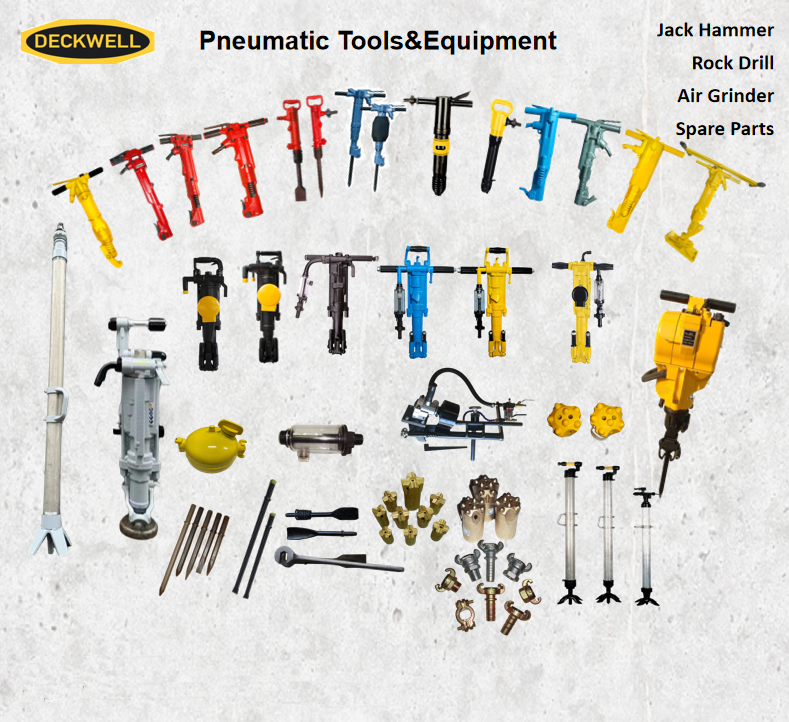
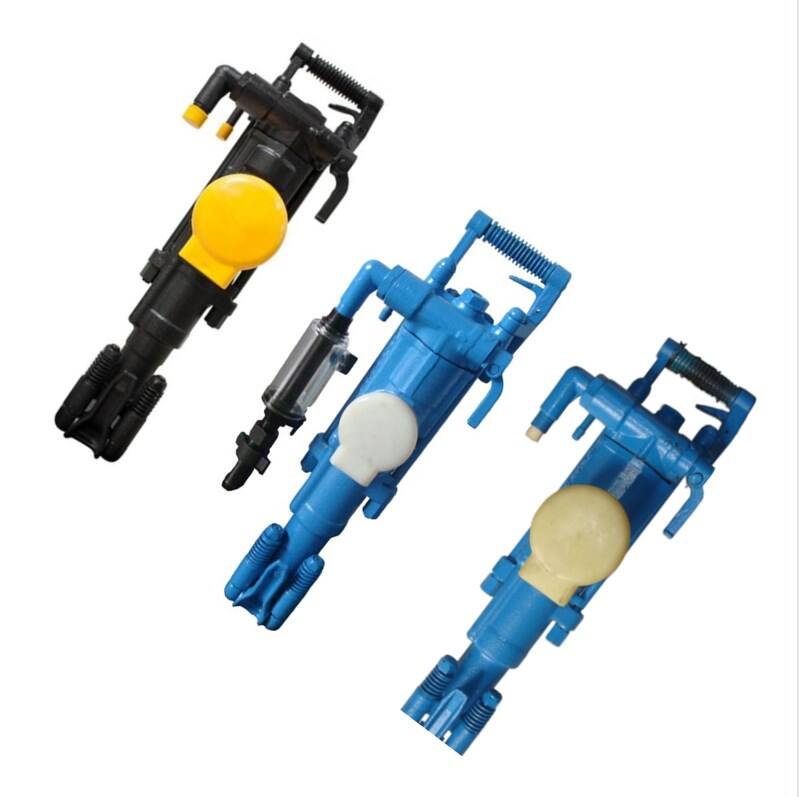
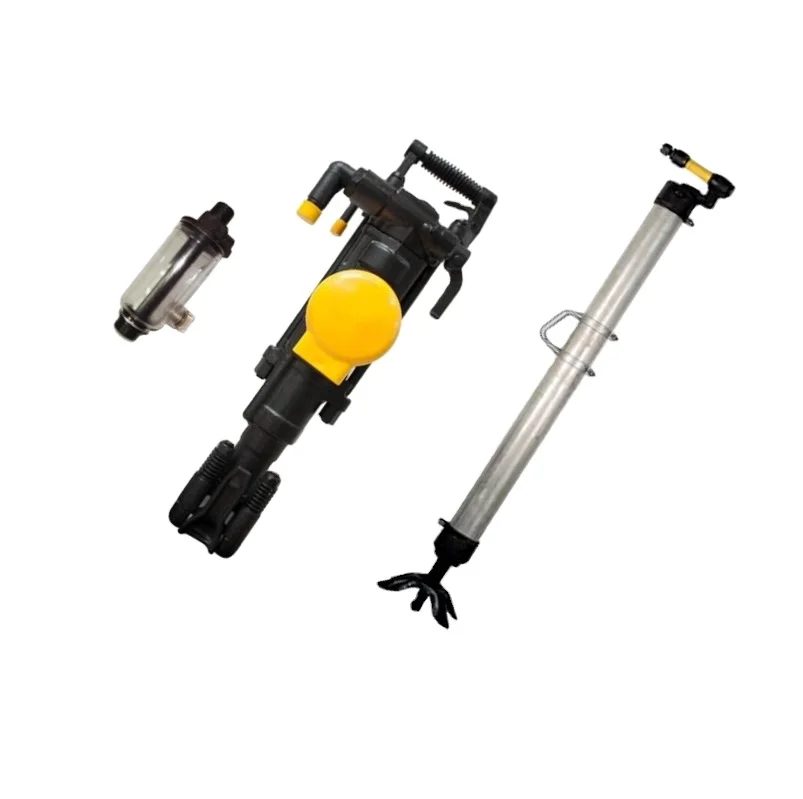
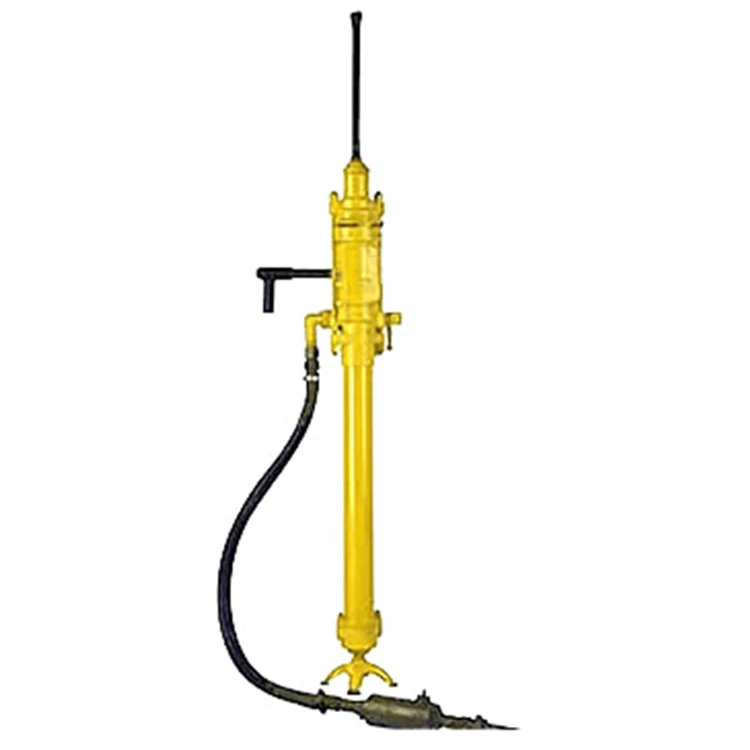
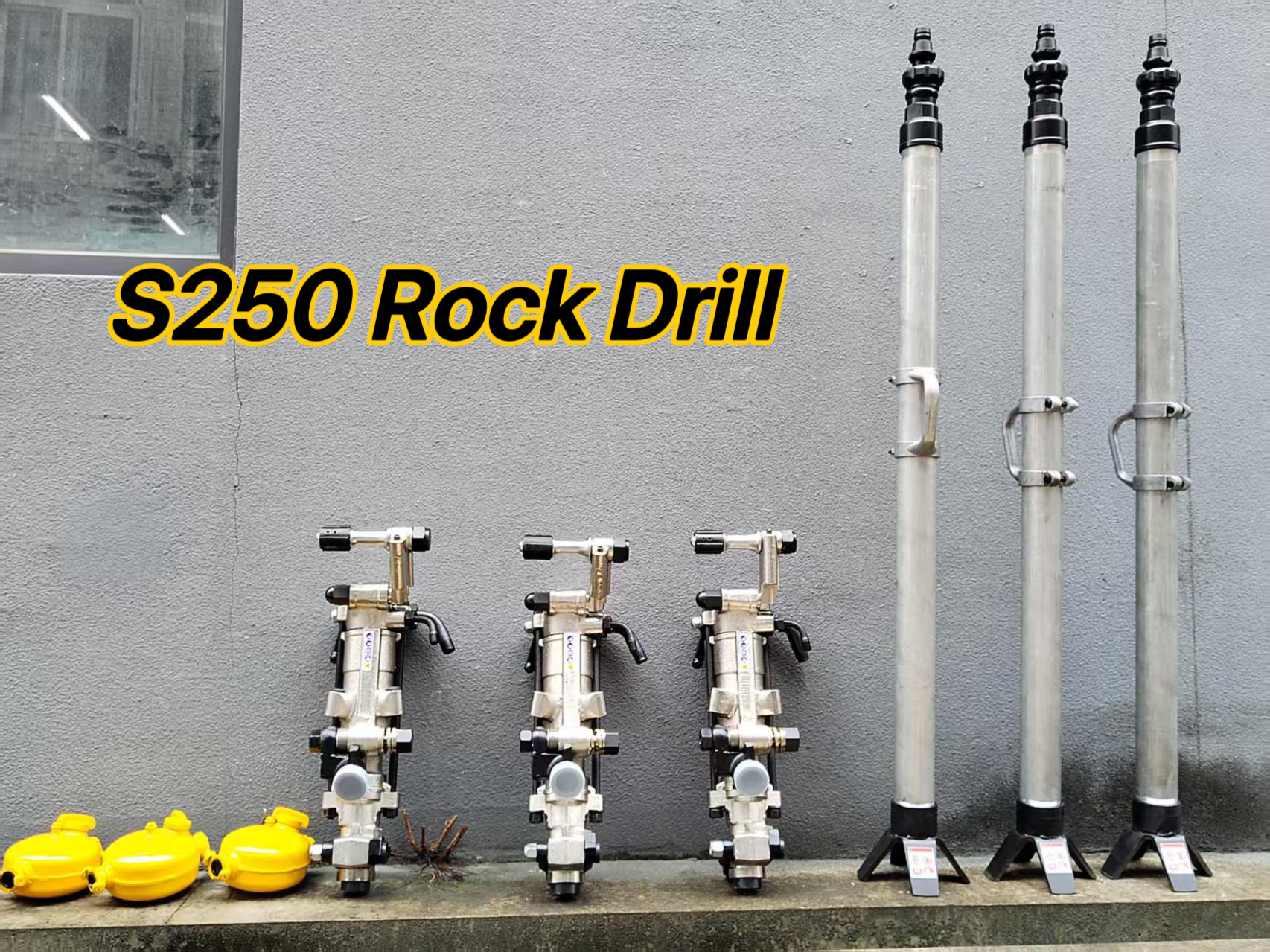
The air leg rock drill represents a significant advancement in rock drilling technology, combining percussive force with mechanized feed systems to enhance drilling efficiency in various geological conditions. This equipment integrates a pneumatic rock drill with an air-powered feed leg, which serves both as a support mechanism and a source of advancing pressure. The drill's operation relies on compressed air to drive a piston that delivers rapid, repetitive impacts to the drill steel, while the air leg, typically mounted between the drill and the ground, applies consistent thrust to maintain optimal bit-rock contact and facilitate hole penetration. Key components include the drill body, air leg cylinder, throttle valve, and drill bits, all engineered for durability under high-stress conditions. The air leg mechanism not only stabilizes the drill during operation but also reduces operator fatigue by absorbing recoil and providing leverage, making it suitable for prolonged use in confined spaces. In mining applications, air leg rock drills are indispensable for blast hole drilling in narrow vein deposits or development headings where larger rigs cannot maneuver. For instance, in underground gold mines, these drills enable precise hole placement for controlled blasting, improving ore fragmentation and reducing dilution. In construction projects, such as tunnel excavation or foundation work in rocky terrain, the equipment allows for accurate drilling for rock bolts or anchoring systems, ensuring structural integrity. A case study from a hydroelectric tunnel project demonstrated a 30% increase in drilling speed compared to handheld drills, attributed to the air leg's steady feed pressure, which minimized bit wandering and reduced re-drilling incidents. Additionally, in quarrying operations, air leg drills provide a flexible solution for secondary drilling tasks, such as pop-holing or bench drilling in areas with limited access. When selecting an air leg rock drill, critical parameters include impact energy, air consumption, and leg extension range, which must align with the rock hardness and hole depth requirements. Regular maintenance, such as lubricating moving parts and inspecting air filters, is essential to prevent downtime and extend service life. For environments with strict noise and dust regulations, models with silencers and dust collection systems are available to mitigate environmental impact. We offer a range of solutions tailored to specific operational needs; please contact us to discuss how our expertise can support your project requirements and provide detailed specifications.