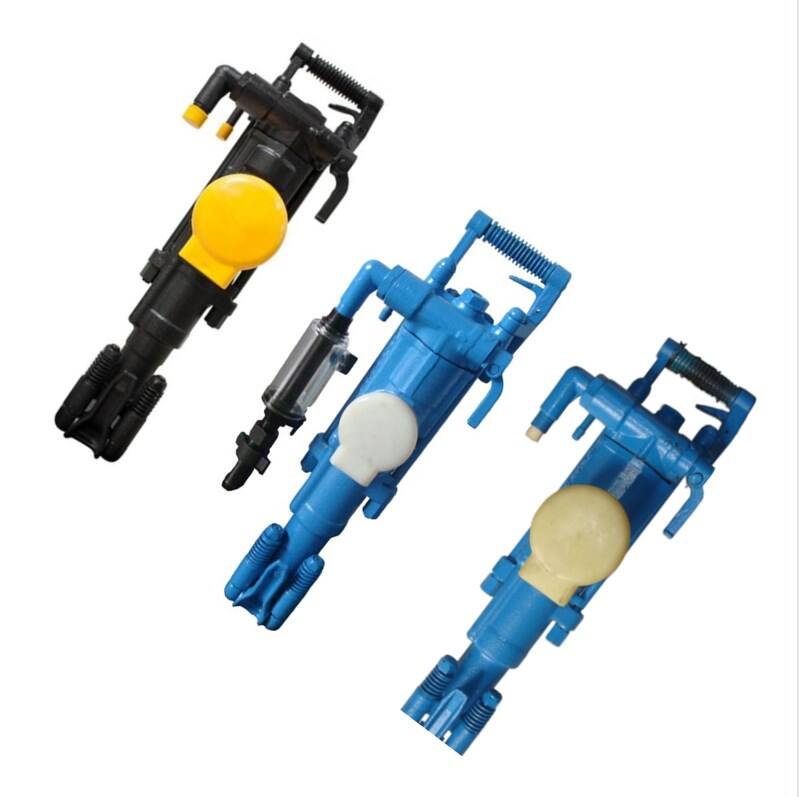
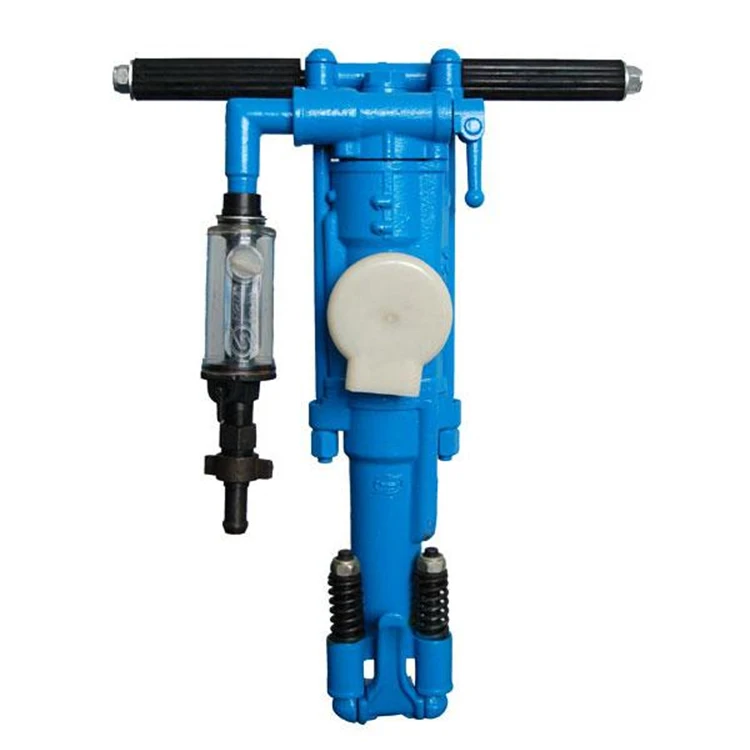
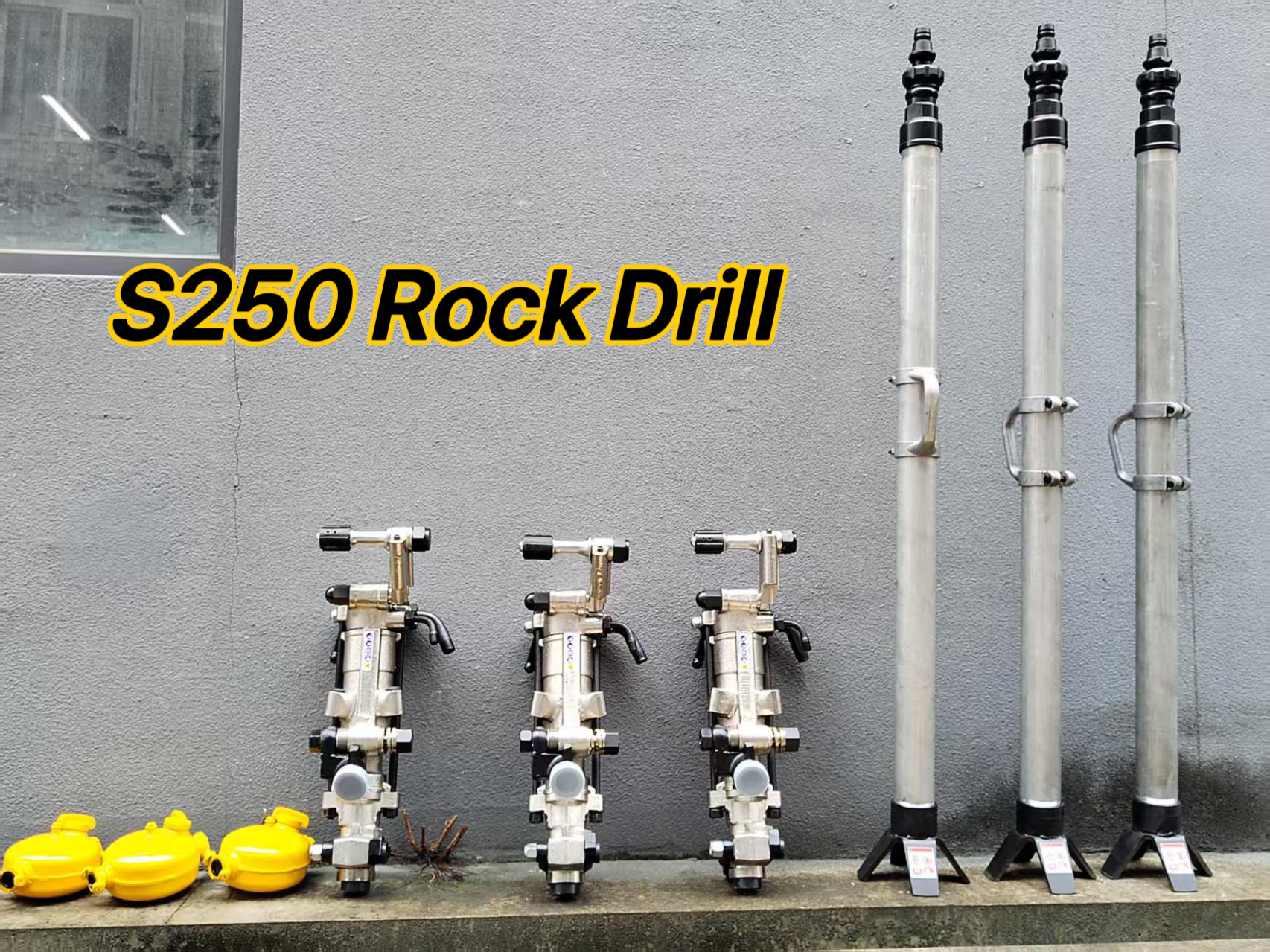
The air leg rock drill is a specialized pneumatic tool that enhances rock drilling efficiency through its integrated feed system, which applies constant pressure to the drill bit during operation. The drill mechanism uses compressed air to power a hammer that delivers high-frequency impacts to the drill steel, fracturing the rock, while the air leg supports the drill and advances it into the formation. This design minimizes operator fatigue and improves drilling accuracy, especially in overhead or horizontal positions. Built with robust materials, the equipment withstands abrasive conditions and heavy use in industries like mining and construction. In mining, air leg drills are employed for drilling charge holes in narrow reefs or for ventilation shaft construction. For instance, in a gold mine, the use of air leg drills for stope drilling increased ore recovery by 18% due to better hole placement. In civil engineering, such as rock excavation for pipelines, the drills allow for precise drilling in confined spaces where large rigs cannot operate. A case study from a hydroelectric project demonstrated a 30% reduction in drilling time for anchor holes in granite, thanks to the leg's stable feed. Railway applications include drilling for rock bolts in cutting slopes or for tunnel lining installations. In public safety, the drills can be used to create escape routes in rock-related accidents or to secure unstable boulders on cliffs. Key technical aspects include impact rate, leg extension range, and air pressure requirements, which should be matched to the rock type and hole depth. Maintenance best practices include cleaning the air filter, checking leg seals for wear, and storing the drill in a dry place. For high-altitude applications, adjustments to air flow may be necessary to maintain performance. To learn about our product range and support services, please contact us for a detailed discussion and site evaluation.