
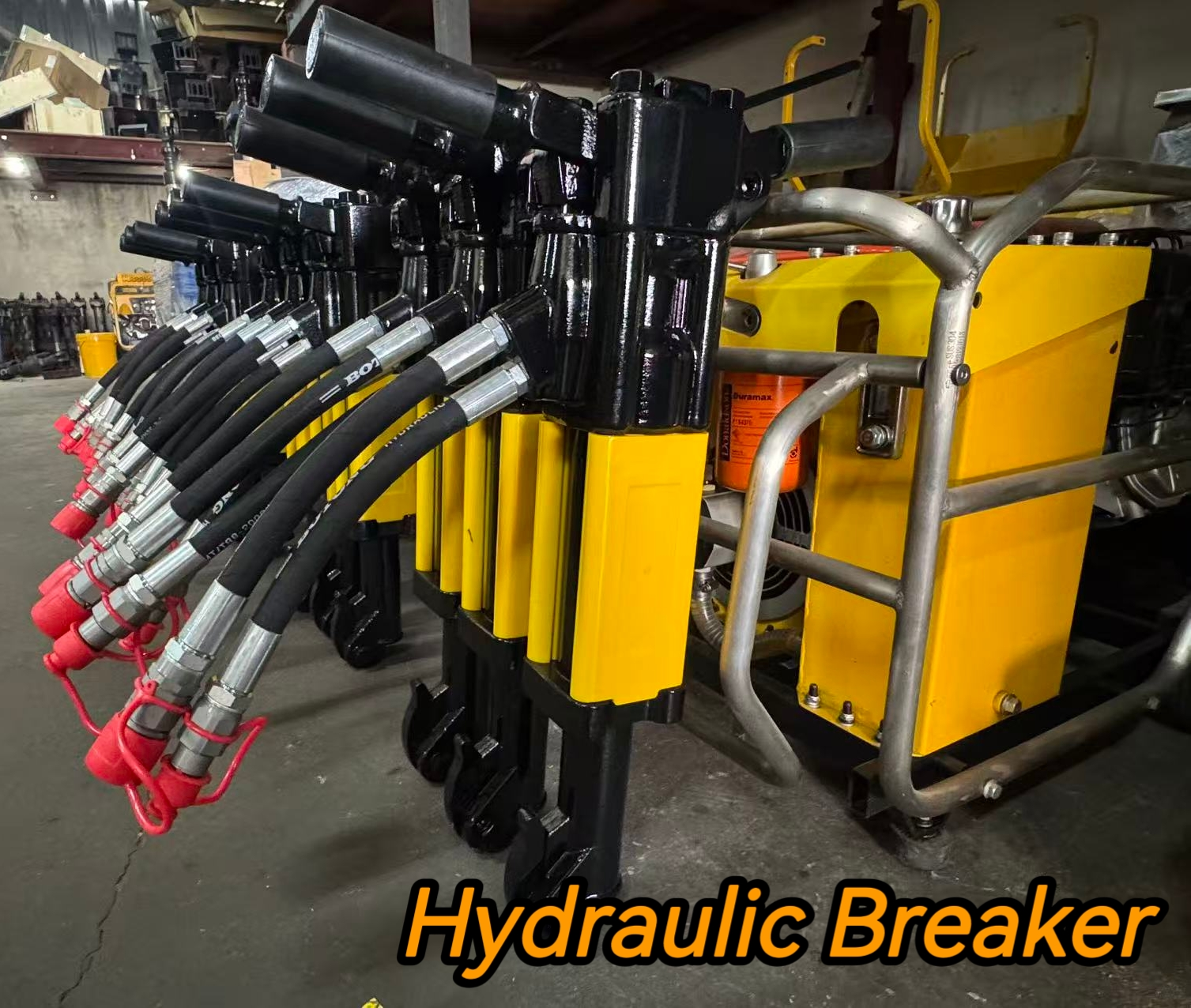
Why Hydraulic Breaker Preventive Maintenance Directly Reduces Downtime
The Cost of Unplanned Failure: From Minor Wear to Production Stoppage
Unplanned hydraulic breaker failures trigger a costly chain reaction. A single worn bushing or seal leak can escalate into piston damage within hours—halting entire operations. Predictive maintenance programs reduce equipment downtime by 45% and catastrophic breakdowns by 75% (Industry Benchmark 2023). Minor wear left unaddressed typically snowballs into:
- Emergency repair costs exceeding planned maintenance by 3–5
- Project delays costing $740k/hour in mining operations (Ponemon 2023)
- Secondary damage to carriers from misaligned impact forces
Proactive inspections catch these issues at the $200 repair stage—not the $15,000 overhaul phase.
The 80/20 Rule in Practice: Targeting High-Impact Hydraulic Breaker Components
Focused maintenance delivers maximum results. Industry data reveals 20% of components cause 80% of hydraulic breaker failures. Prioritizing these high-impact parts slashes downtime risks:
| Component | Failure Rate | Downtime Impact | Maintenance Focus |
|---|---|---|---|
| Piston Seals | 32% | Critical | Monthly inspection |
| Accumulator | 18% | Severe | Pressure testing |
| Bushings | 29% | High | Lubrication cycles |
| Chisel/Piston Fit | 21% | Moderate-Severe | Daily measurement |
Concentrating resources on seal integrity, nitrogen pressure checks, and bushing lubrication prevents 68% of unplanned outages. This strategic approach extends hydraulic breaker service life by 2–3 years while cutting annual maintenance hours by 40%.
Essential Hydraulic Breaker Inspection and Lubrication Protocols
Critical Visual Checks: Chisel, Piston, Nitrogen Chamber, and Bushings
Regular visual checks should be part of every maintenance routine to avoid serious problems with hydraulic breakers down the road. Begin with looking at the chisel area closely for any signs of cracking or bending since damage there tends to speed up wear inside the impact chamber. When checking pistons, watch out for scratches on their surfaces and test the nitrogen chamber for pressure loss with those specific gauges recommended by the manufacturer. Don't forget about bushings either they often get overlooked but show early warning signs through irregular wear patterns that point toward alignment issues. Industry research points to around two thirds of unexpected equipment shutdowns actually coming from worn bushings going unnoticed (Heavy Equipment Journal reported this back in 2023). Before starting any inspection work, give all parts a good power wash first. Dirt can hide small fractures or leaking fluids that would otherwise go unseen during routine checks.
Optimizing Grease Application: Manual Precision vs. Automatic System Reliability
Getting the lubrication right can actually double the lifespan of those hydraulic breakers, though that 40% figure only comes true if done properly. When greasing manually, there's real art to it. Most operators know they should stick to what the manufacturer recommends and hit those intervals roughly every hour or two of operation. The trick is making sure the grease spreads around the tool housing without letting any get into the percussion chamber itself, because that's where problems start happening with seal displacement. Automatic lubrication systems offer something different altogether. They cut down on mistakes people make when applying grease themselves, since these systems just keep delivering at regular intervals. Sure, setting one up will cost about 15% extra initially, but according to Construction Technology Review from last year, shops report seeing around 70% fewer issues related to improper lubrication after switching over. And here's something worth remembering: always stick with the specific grease types recommended for each machine. We've seen countless cases where folks tried saving money with off-brand products, only to end up replacing bushings way before their time due to viscosity problems.
Diagnosing Common Hydraulic Breaker Failures Before They Cause Downtime
Loss of Striking Power and Abnormal Vibration: Signs of Internal Component Degradation
When impact force drops and strange vibrations start showing up, that's usually a red flag for serious internal wear that needs fixing right away. Most of the time these issues come from pistons getting scored because of dirt getting into the system, sometimes there's also problems with nitrogen pressure dropping in the accumulator area, or the bushings just wearing out over time. Look at the numbers: machines that lose power end up sitting idle for roughly half again as long compared to those that get regular maintenance checks. Keeping track of performance day after day helps techs catch problems before they become disasters. With good records, experienced mechanics can spot trends and address potential failures before they actually happen on site.
- Measure striking force degradation against baseline metrics
- Identify vibration patterns indicating specific component failures
- Schedule targeted repairs before secondary damage occurs
Ignoring these warnings risks cascading failures—where a $200 bushing replacement escalates to a $5,000 piston assembly overhaul.
Hydraulic Leaks and Dry-Firing: Two Avoidable Errors That Accelerate Hydraulic Breaker Failure
Fluid leaks and dry-firing incidents account for 68% of preventable hydraulic breaker failures (2023 industry maintenance reports). Seal degradation from particulate contamination causes most leaks, while dry-firing (operating without material contact) generates destructive shockwaves through internal components. Mitigation requires:
- Implementing visual inspection protocols for hose fittings and accumulator seals
- Installing pressure sensors triggering automatic shutdown during dry-fire events
- Training operators on proper positioning techniques
A single dry-firing episode can cause micro-fractures in the valve block, reducing service life by 300 operating hours. Combining sensor technology with operator certification reduces these failures by up to 81%.
Proven Strategies to Sustain Hydraulic Breaker Uptime Long-Term
Leveraging IoT and Sensor Data for Predictive Hydraulic Breaker Health Monitoring
According to Ponemon's 2023 report, companies implementing predictive maintenance through IoT sensors see around 30% fewer unexpected shutdowns. These smart monitoring systems keep an eye on things like machine vibrations, changes in hydraulic pressure, and unusual temperature readings as they happen. If something starts going wrong with parts such as bushings or pistons, workers get notified right away so they can fix problems before equipment breaks down completely. Take the nitrogen chamber for instance. When there are strange heat patterns showing up around there, it often means seals are starting to break down over time.
Building a Tiered Maintenance Schedule: Daily Checks, Weekly Adjustments, Quarterly Overhauls
A structured maintenance cadence prevents cumulative damage:
- Daily: Inspect chisel wear, grease levels, and hydraulic leaks during operator checks.
- Weekly: Verify nitrogen pre-charge pressure and tighten mounting bolts.
- Quarterly: Replace seals and bushings while calibrating impact force settings.
This tiered approach aligns with manufacturer guidelines, extending service life by 40% compared to reactive fixes. Consistent lubrication and component inspections avoid dry-firing risks and pressure loss.
FAQ
-
What is predictive maintenance in hydraulic breakers?
Predictive maintenance is a proactive approach to maintenance that uses condition-monitoring tools and techniques, such as IoT sensors, to identify potential failures before they occur. -
Why is regular lubrication important for hydraulic breakers?
Regular lubrication is crucial because it helps reduce friction and wear, significantly extending the lifespan of hydraulic breakers. -
How can IoT sensors help in maintaining hydraulic breakers?
IoT sensors can monitor real-time data such as vibrations, hydraulic pressure, and temperature, alerting operators to impending issues before they lead to breakdowns. -
What are common signs of hydraulic breaker internal component degradation?
Common signs include loss of striking power and abnormal vibrations, indicating possible wear and tear of internal components like pistons or bushings. -
How can dry-firing affect hydraulic breaker performance?
Dry-firing can create destructive shockwaves, leading to internal damage and reduced service life. Using pressure sensors and proper training can mitigate these effects.