Understanding the Role of Air Leg Rock Drill in Tunneling Operations
How Pneumatic Air Leg Rock Drills Work in Confined Tunnel Environments
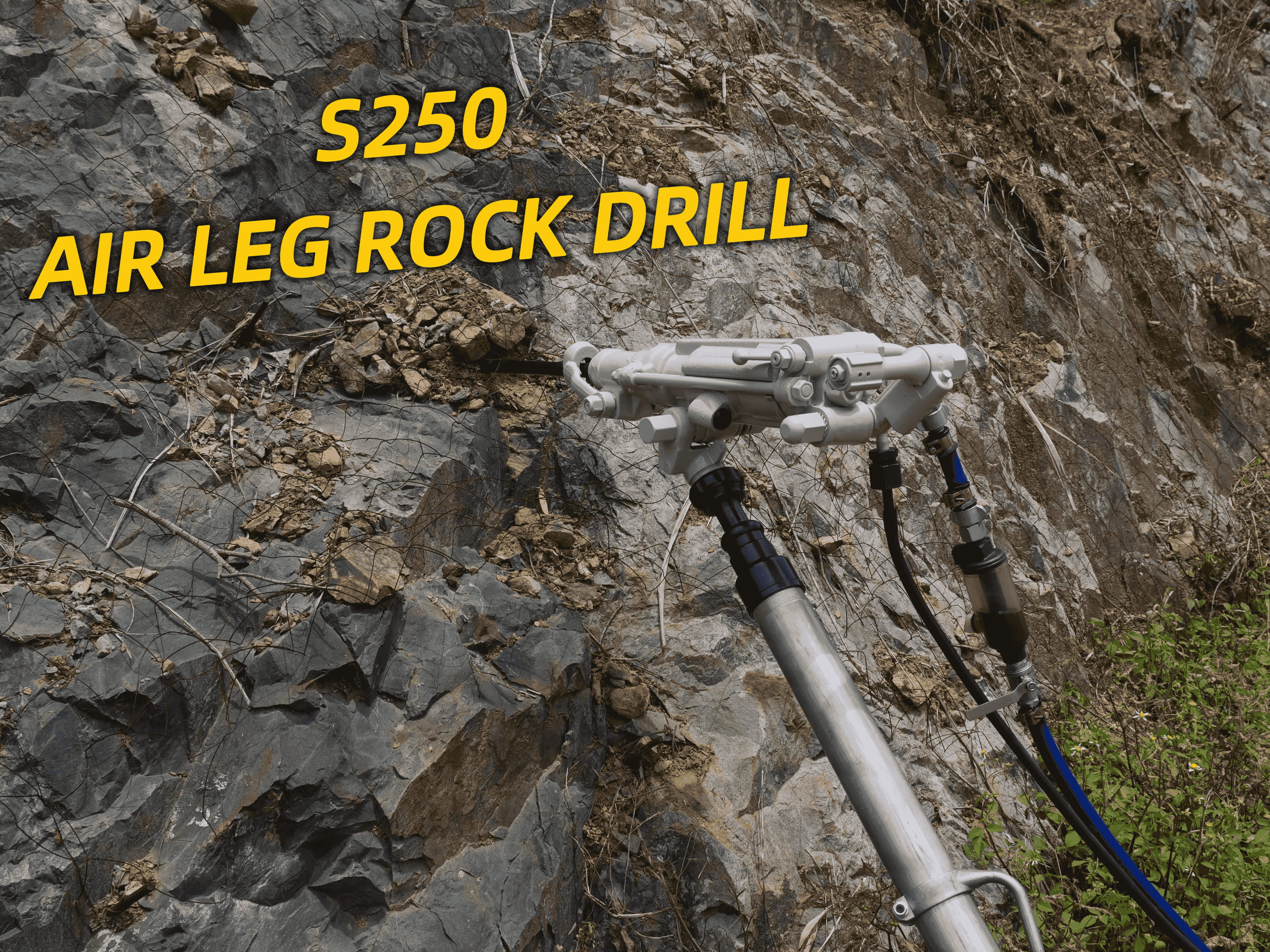
Rock drills with air legs work by using compressed air to power a piston that creates fast hammering motions through the drill bit. What makes these tools stand out is their adjustable air leg feature which keeps everything steady while drilling. This allows workers to create straight holes vertically even when dealing with rough or irregular rock surfaces. According to research from Springer in 2020, these pneumatic systems cut down on kickback by around 40 percent compared to regular handheld versions. That kind of reduction matters a lot in tight spaces like mine shafts or underground tunnels where there's not much room to maneuver and keeping things stable is essential for getting accurate results.
Common Applications: Why Air Leg Models Like YT24, YT27, and YT28 Remain Widespread in Underground Projects
Drills designed for creating blast holes between 32 to 42 mm wide and setting rock bolts have become must-haves across mining operations and tunnel construction projects. Take the popular YT28 model for instance it works great at around 6 to 8 bar air pressure levels and pairs well with smaller compressors found on most job sites. When dealing with tough rock formations, these air leg systems really shine compared to old-fashioned hand drilling techniques. Field tests show they can boost productivity by roughly 35%, which makes all the difference when space limitations prevent bringing in those big hydraulic machines that require more room to operate properly.
Case Study: Effective Use of the YT28 in a Mountain Tunnel Project in Southwest China
In a tunnel boring operation out in Sichuan back in 2022, workers who switched to YT28 drills saw their progress jump to around 18 meters per day when cutting through hard granite rock. What really made a difference was the air leg system attached to these drills. Compared to regular handheld models, it cut down on those annoying alignment issues by nearly two thirds. Plus, the wet drilling attachments kept dust particles at bay, holding them under that critical 1 mg/m³ threshold for worker safety. Looking at similar projects across China, we've noticed a pattern where teams using proper air leg setups tend to waste about 25% less time fixing mistakes during angled digging operations. Makes sense when you think about how much smoother everything runs with better equipment.
Drilling Depth and Hole Diameter Capabilities of Air Leg Rock Drills in Tunneling
Typical Blast Hole Requirements: Matching 32–42 mm Diameter Needs with Air Leg Rock Drill Output
Air leg rock drills typically create blast holes between 32 and 42 mm in diameter, which works well for pretty much all standard tunneling jobs these days. These machines operate somewhere around 250 to 400 blows each minute, making them quite effective when working through materials such as granite or limestone that aren't too soft but still manageable. The way these tools deliver power matches what we see in contemporary tunneling practices today. When holes are sized correctly, it leads to better fragmentation of rock material and gives engineers more control over how blasts will affect surrounding structures during excavation projects.
Depth Limitations: Challenges in Drilling Beyond 2 Meters with Manual Air Leg Systems
Air leg drills used manually run into serious problems when going past around 2 meters deep. The deeper they go, the worse things get for operators who start feeling exhausted faster while bits tend to wander off course. Drilling times can balloon by roughly 30% per hole compared to what machines accomplish. Why? Because these tools depend entirely on human hands instead of automatic feeding systems found in modern equipment. That means each hole drilled below that mark becomes not just harder work but also less uniform in quality across different jobsites.
Practical Implications for Tunnel Excavation Efficiency and Blasting Design
Due to depth constraints, contractors typically increase the number of shallow holes by 15–20% to achieve desired blast patterns. While this approach slightly extends drilling cycles, it minimizes overbreak risks in confined spaces. This tradeoff highlights the importance of aligning equipment selection with geological conditions and safety requirements.
Air Leg Rock Drill vs. Jackleg Pneumatic Drills: A Performance and Safety Comparison
Manual Air Leg vs. Semi-Automated Jackleg Drills: Key Differences in Operation and Output
When using air leg drills, operators have to constantly adjust the position by hand, changing angles and applying different amounts of pressure as they go. These tools work pretty well for short bursts of drilling when working through tough rock formations. On the other side of things, those semi-auto jackleg rigs come equipped with either pneumatic or hydraulic systems that keep pushing forward at steady pressure levels. This means workers don't get as tired out after spending hours on the job site. Most models run between about 90 to 110 pounds per square inch of pressure. According to some field tests published by Hassan and Lee back in 2022, these jackleg versions actually drill through medium hard granite around 15 to maybe even 20 percent quicker than their manual counterparts. Makes sense why many contractors prefer them for longer projects where consistency matters most.
Field Example: YT27 Air Leg Drill vs. Jackleg Rig in a Mining Tunnel Setting
Tests conducted at a zinc mine showed some interesting results when comparing drilling equipment. The YT27 air leg drill managed an average of 4.2 meters per hour for those 1.5 meter holes, whereas the jackleg rig got through 6.8 meters per hour on the larger 3 meter holes. But here's where things get interesting. When it comes to moving around in narrow spaces, the air leg system has招抢筹疌, showing about 32 percent better maneuverability in tunnels less than 2.5 meters high. And this makes sense when we look at actual field conditions. Most underground workers will tell you that space is always limited down there. That's probably why so many engineers end up going with air leg models despite their slower drilling speed. According to Tunneling Journal from last year, roughly eight out of ten engineers surveyed actually favor these types of drills specifically for working in cramped underground areas.
Evaluating Efficiency, Operator Fatigue, and Safety Across Drilling Systems
Manual air leg systems require operators to put in roughly 38 percent more physical work for every meter of drilling completed, which naturally leads to increased muscle and joint strain during those long work shifts underground. The newer jackleg rigs help cut down on alignment problems by about two thirds thanks to their guided feed mechanisms, although they do come at the cost of using around a quarter more compressed air overall. Interestingly enough, even though these automated systems seem more advanced, they actually produce less kickback force compared to traditional methods (around 12 kilonewtons versus 18 kilonewtons). This makes them particularly valuable when working in tunnel environments where the ground stability is questionable or unpredictable.
Managing Dust and Ventilation Challenges in Air Leg Rock Drill Operations
Air leg rock drill operations generate high levels of respirable crystalline silica (RCS), particularly in poorly ventilated tunnels. According to a 2023 NIOSH study, workers exposed to RCS concentrations above 0.05 mg/m³ face an 18% higher risk of developing silicosis over five years.
Respirable Silica and Dust Generation: Major Risks in Poorly Ventilated Tunnels
Silica particles under 4 microns can penetrate deep into lung tissue. In confined spaces without adequate airflow, dust concentrations often reach 4–7 times OSHA’s permissible exposure limit of 0.025 mg/m³, posing serious long-term health hazards.
Effective Dust Control Strategies: Wet Drilling and Local Exhaust Ventilation
Using wet drilling methods cuts down on dust emissions somewhere between 60 to 85 percent because it stops those tiny particles right where they form. Things get even better when this approach works alongside local exhaust systems that have those high efficiency particulate air filters installed. Some actual field work done inside rail tunnels across China demonstrated just how effective this combination can be. They saw nearly a 92% drop in airborne dust levels when they used these special dual phase misting nozzles running at around 8 to 12 liters per minute of water flow, all while maintaining an extraction speed of about 1.2 meters per second through the system.
Ventilation Best Practices to Support Air Leg Rock Drill Use in Enclosed Spaces
Placing auxiliary fans within 15 meters of the drilling face helps maintain minimum airflow velocities above 0.6 m/s. A 2025 ventilation study recommends integrating real-time particulate monitors with automated damper controls, which reduced hazardous exposure periods by 73% in South African mining tunnels.
Safety Protocols and Operational Best Practices for Air Leg Rock Drills in Tunnels
Identifying Common Hazards: Instability, High Air Pressure, and Misalignment Risks
Operators face three primary hazards: sudden instability from improper leg anchoring, potential hose ruptures under 5–7 bar pressure, and increased bit jamming (up to 18%) due to misalignment between drill steel and rock surface. Additional risks include prolonged exposure to noise levels around 110 dB and hand-arm vibration syndrome.
Essential Precautions: Ensuring Stability, Proper Alignment, and Pressure Control
To prevent accidents, operators should deploy the air leg at a 75–85° angle against stable tunnel flooring and use guide rods for vertical alignment. Installing pressure regulators and conducting daily checks with calibrated gauges prevents overpressurization. Lockout/tagout procedures during bit changes reduce accidental activation incidents by 63%.
Training, Maintenance, and Equipment Checks to Maximize Safety and Efficiency
Companies that implement quarterly training sessions focused on drill mechanics and emergency procedures tend to see around a 40% drop in drilling accidents according to industry reports. When it comes to maintenance work, sticking to basic safety rules makes all the difference. The air motor needs regular lubrication every week or so, while those leg cylinders require a monthly once over. Workers who use standardized checklists for things like checking chuck jaw wear, looking at air filters, and inspecting piston seals report roughly 20-25% fewer unexpected breakdowns. These simple practices not only keep everyone safer but also help maintain equipment performance even when working deep underground where conditions can get pretty rough.
FAQ
What is an air leg rock drill?
An air leg rock drill is a pneumatic tool used in tunneling and mining operations to create holes in rock. It uses compressed air to power a piston that rapidly hammers the drill bit, and is equipped with an adjustable air leg to stabilize drilling operations.
Why are air leg rock drills commonly used in confined tunnel environments?
Air leg rock drills are preferred in confined tunnel environments due to their ability to reduce kickbacks, provide stability, and help workers drill straight holes on irregular surfaces, which is essential for precision.
How does the YT28 model enhance productivity in tunnel projects?
The YT28 model enhances productivity by working effectively at air pressure levels of 6 to 8 bar, making it suitable for tough rock formations, and boosting productivity by approximately 35% as compared to manual hand drilling techniques.
What are the challenges of using manual air leg drills beyond 2 meters?
The main challenges include increased operator fatigue, decreased drilling precision, and longer drilling times compared to automated systems. Manual air leg drills rely heavily on human effort, making them less efficient for deeper holes.
How do air leg rock drills compare to jackleg pneumatic drills?
Semi-automated jackleg pneumatic drills generally offer higher drilling speeds and reduced operator fatigue compared to manual air leg drills. However, air leg drills show better maneuverability in cramped spaces, making them preferable for confined underground areas despite slower speeds.
What dust control strategies are effective for air leg rock drill operations?
Effective strategies include using wet drilling methods and local exhaust ventilation systems equipped with high-efficiency particulate air filters, which can significantly reduce airborne dust levels.
Table of Contents
- Understanding the Role of Air Leg Rock Drill in Tunneling Operations
- Drilling Depth and Hole Diameter Capabilities of Air Leg Rock Drills in Tunneling
- Air Leg Rock Drill vs. Jackleg Pneumatic Drills: A Performance and Safety Comparison
- Managing Dust and Ventilation Challenges in Air Leg Rock Drill Operations
- Safety Protocols and Operational Best Practices for Air Leg Rock Drills in Tunnels
-
FAQ
- What is an air leg rock drill?
- Why are air leg rock drills commonly used in confined tunnel environments?
- How does the YT28 model enhance productivity in tunnel projects?
- What are the challenges of using manual air leg drills beyond 2 meters?
- How do air leg rock drills compare to jackleg pneumatic drills?
- What dust control strategies are effective for air leg rock drill operations?