
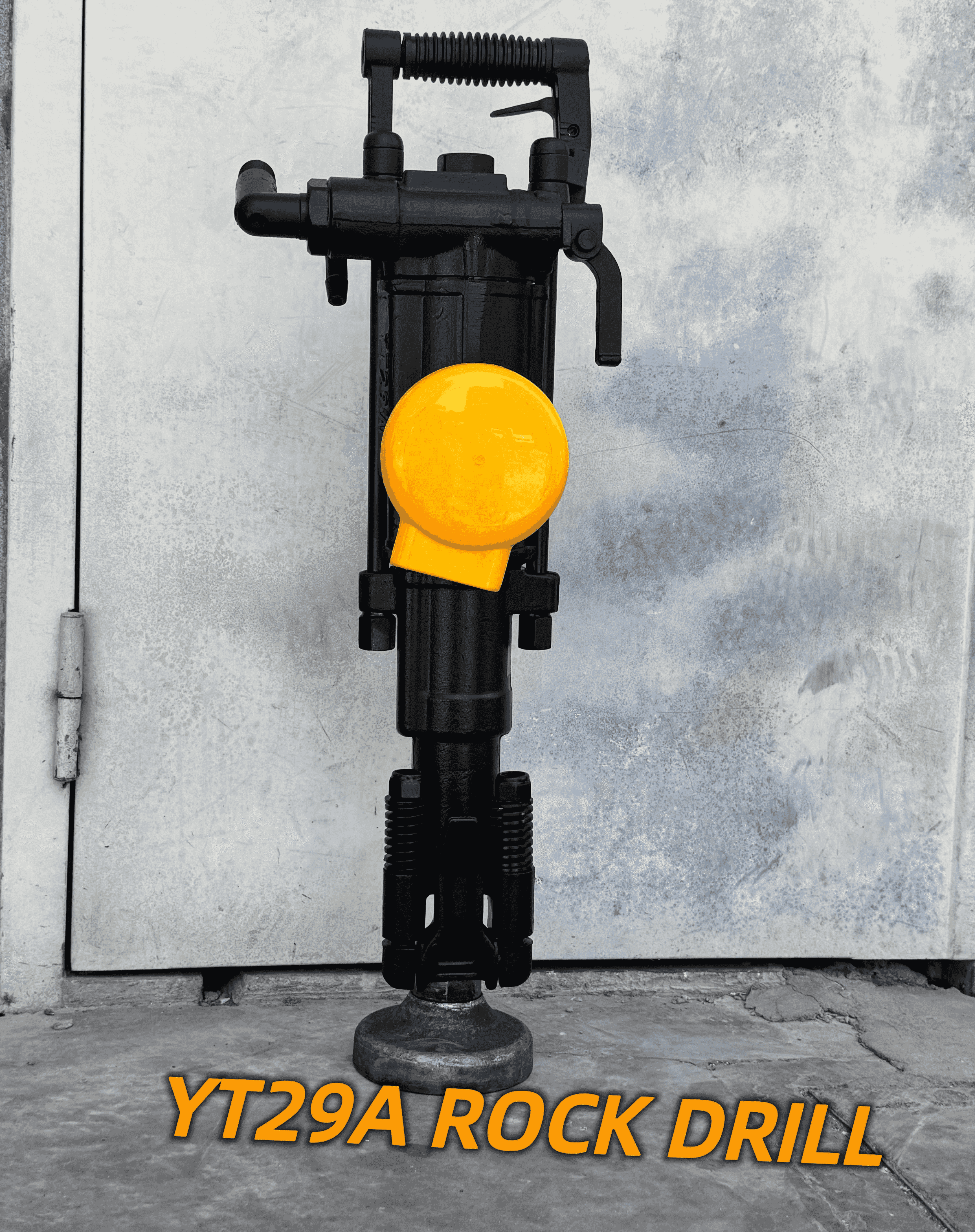
Superior Performance in Hard Rock and Harsh Quarry Environments
Efficient Rock Penetration in Hard Materials Using High-Impact Pneumatic Force
Rock drills powered by compressed air hit rocks with fast, powerful impacts that get into granite and basalt about 38% quicker than their electric counterparts according to research published by the Geotechnical Institute last year. The reason these tools work so well is because they transfer energy instantly when the piston hits. Each strike packs over 25 kilojoules of force, which cracks through tough metamorphic rock without generating much heat at all. Look at what happens in the quarries across South Africa where workers rely on Down-the-Hole or DTH pneumatic systems. These setups routinely drill between six and eight meters deep every hour, something absolutely essential for meeting tight deadlines during blasting operations.
Consistent Operation Under Extreme Temperatures, Dust, and Moisture
Pneumatic systems work pretty well across a wide range of temperatures, typically handling conditions from around minus 20 degrees Celsius all the way up to 60 degrees Celsius. They tend to beat electric drills when things get really hot or cold. The sealed parts stop dust from getting inside where it would cause problems, something that often brings down hydraulic systems. Special alloys used in construction also stand up better against moisture, which matters a lot on those damp quarry floors. Looking at some research done in 2025 about lubrication in underground mines showed something interesting too. Pneumatic drills stayed operational about 92% of the time even when humidity was through the roof, while electric versions lagged behind by roughly 34 percentage points. These tools have about 60% fewer moving pieces compared to their hydraulic cousins, so there's just less chance for pumps to fail or fluids to contaminate everything. That makes them much more dependable over time.
Comparison with Electric and Hydraulic Drills in Rugged Quarry Conditions
In Chilean copper quarries, pneumatic drills demonstrated three key advantages:
- Shock resilience: Sustained 8-hour operation in high-vibration zones without bearing failures
- Overload tolerance: Handled 220% momentary power surges without motor burnout
- Maintenance intervals: 500-hour service cycles compared to 200 hours for electric drills
Hydraulic systems consumed 19% more energy per meter drilled, while electric drills faced frequent downtime due to dust clogging cooling fans. These results support industry data showing pneumatic drills reduce total operational costs by $18–$23 per ton in hard rock applications.
Mechanical Efficiency and Power Delivery of Pneumatic Rock Drills
How compressed air drives high-frequency hammering with minimal energy loss
Pneumatic rock drills work by turning compressed air into movement through pistons, hitting rocks at around 2,000 to 3,000 times each minute while transferring about 85% of their energy efficiently according to Power Tools Quarterly from last year. These tools cut out things like hydraulic fluids or electric motors altogether, which actually helps them lose less energy due to friction somewhere between 30 and maybe even 40 percent. What makes these drills so effective is their fast hammering action powered by quick switching of air valves inside. This allows the drill bit to keep applying steady pressure against rock surfaces even when working through broken or cracked stone layers.
Lightweight design and high power-to-weight ratio for improved handling
Weighing 35–50% less than hydraulic models, pneumatic drills offer a 2.8:1 power-to-weight ratio—essential for overhead work and confined spaces. Operators maneuver them 22% faster while sustaining 98% impact consistency (Heavy Equipment Digest 2023). Constructed from aluminum alloy, these tools reduce operator arm fatigue by 18 hours per month, enabling uninterrupted 6-hour shifts.
Operational best practices for maximizing efficiency and safety
Three core protocols enhance performance:
- Pre-shift pressure checks: Maintain air supply at 6.2–6.9 bar to ensure complete rock fracturing
- 15-minute lubrication cycles: Reduce bit wear by 60% (TJ Realon 2023 maintenance guidelines)
- 45° angle control: Optimize energy transfer and minimize kickback risk
Teams trained in these methods report 40% fewer tool replacements and 28% faster hole completion.
Durability and Long-Term Reliability in Continuous Operations
Resistance to overload, vibration, and mechanical shock in quarries
Pneumatic rock drills absorb sudden stress fluctuations better than hydraulic systems, demonstrating 32% superior shock dissipation under 150 MPa rock loads. Without fragile electronic components, they withstand vibration levels above 25 m/s²—ideal for drilling through heterogeneous limestone or granite prone to abrupt fracturing.
Fewer wearing parts and reduced risk of catastrophic failure
With only 8–12 core components versus over 30 in electric drill heads, pneumatic systems have fewer failure points. A 2023 study across 47 quarries revealed hydraulic users spent 19% more annually on seal replacements, while pneumatic operators experienced 63% fewer unplanned breakdowns caused by particulate contamination in valves.
Lifecycle performance: why pneumatic systems outlast electric alternatives
Comparative durability analysis shows pneumatic drill components retain 85% of original impact force after 8,000 hours—surpassing electric motors, which typically require rewinding at 5,000 hours in high-silica environments. Air-driven mechanisms avoid the electromagnetic degradation that plagues electric systems in dusty conditions.
Debating reliability: Are pneumatic rock drills more dependable than modern electric drills?
Electric drills do have their place where precision matters most, but when it comes to real world conditions in quarries, things look different. A recent look at 15 mines found that nearly eight out of ten managers still go with pneumatic systems for the main drilling work because these tools handle surprises better than their electric counterparts. The thing is, electric motors can get seriously damaged if something jams them up. Pneumatic tools work differently though. They naturally control how much force gets applied thanks to the way compressed air works inside them. This means they act as a kind of built-in protection system whenever workers hit those unexpected tough spots in the rock formations.
Cost-Effectiveness Through Low Maintenance and Operational Savings
Lower Maintenance Needs Compared to Hydraulic and Electric Drilling Systems
Pneumatic rock drills require 40% fewer routine maintenance interventions than electric models due to simpler mechanics. Without complex electrical systems or hydraulic fluids, operators avoid 70% of lubrication-related failures (2023 durability study). Compressed air reduces internal corrosion and provides self-cleaning airflow, minimizing particulate buildup in abrasive environments.
Reduced Downtime and Repair Costs in High-Intensity Quarry Environments
Field data indicates pneumatic drills achieve 92% operational availability in continuous operations, compared to 78% for electric models. Modular construction allows rapid component replacement without specialized tools, cutting repair times by 55% (2024 operational efficiency report). One Brazilian granite quarry saved $120,000 annually after switching to pneumatic systems, highlighting cumulative cost benefits.
Total Cost of Ownership: Pneumatic vs. Electric Rock Drills Over Time
Over five years, pneumatic drills yield 28% lower total ownership costs, despite higher initial compressor investments. Key savings include:
- $18k/year reduction in preventive maintenance
- 60% longer service intervals for critical wear parts
- $0 electrical retrofit costs when expanding fleets
A 2023 industry analysis confirmed pneumatic systems retain 45% more residual value than electric equivalents after 10,000 hours, with cost advantages growing in operations running three shifts daily.
Real-World Impact: Case Study of DTH Pneumatic Drills Boosting Quarry Output
South African Limestone Quarry Achieves 27% Production Increase with DTH Pneumatic Drills
A 2023 study at a South African limestone quarry showed that switching to DTH pneumatic drills increased daily output by 27% and reduced drilling time per meter by 25%. High-impact hammering minimized borehole deviation, enabling 18% deeper excavations per shift. Workers reported 40% fewer tool changes due to extended bit life from compressed-air operation.
Faster, Deeper Drilling with Down-The-Hole Pneumatic Technology
Geotechnical trials show DTH pneumatic drills penetrate sedimentary rock 35% faster than hydraulic alternatives. Their sealed hammer design prevents debris ingress, sustaining 180–200 blows per minute even at 15-meter depths. This consistent force transmission reduces tripping frequency, allowing operators to complete 4–5 additional boreholes per 10-hour shift in limestone.
Scalable Integration with Rig-Mounted Systems for Expanded Operations
Rig mounted DTH systems at quarries can slash setup times almost in half when they integrate those modular air compressors. A quarry operation saw their number of active drill lines go from one to two within just over three months after retrofitting old rigs with pneumatic parts rather than tearing out whole electric systems. Getting rid of those pesky hydraulic leaks plus cutting down on electrical maintenance work gave them about a 20 something percent edge when it came to expanding operations without breaking the bank.
Key Advantages Observed in Field Deployments:
- 19% lower compressed air consumption vs. older pneumatic models
- 30-minute average daily maintenance reduction per drill
- Zero voltage drop issues in remote sections
This case illustrates why 68% of surveyed quarry managers now prioritize pneumatic rock drills for rapid expansion in sedimentary rock environments.
FAQ Section
What are the main advantages of pneumatic rock drills?
Pneumatic rock drills offer superior mechanical efficiency, reduced maintenance needs, and better shock resilience compared to electric and hydraulic drills. They perform well under extreme temperatures and resist moisture and dust.
Why are pneumatic drills preferred in quarries?
Pneumatic drills are favored due to their reliability in rough conditions, lower operational costs, and fewer breakdowns compared to other drill types, making them ideal for high-intensity operations.
How do pneumatic drills compare in terms of cost-effectiveness?
Over time, pneumatic drills demonstrate lower total ownership costs and consistent operational availability, resulting in substantial savings in preventive maintenance and repairs.
Table of Contents
- Superior Performance in Hard Rock and Harsh Quarry Environments
- Mechanical Efficiency and Power Delivery of Pneumatic Rock Drills
- Durability and Long-Term Reliability in Continuous Operations
- Cost-Effectiveness Through Low Maintenance and Operational Savings
- Real-World Impact: Case Study of DTH Pneumatic Drills Boosting Quarry Output
- FAQ Section