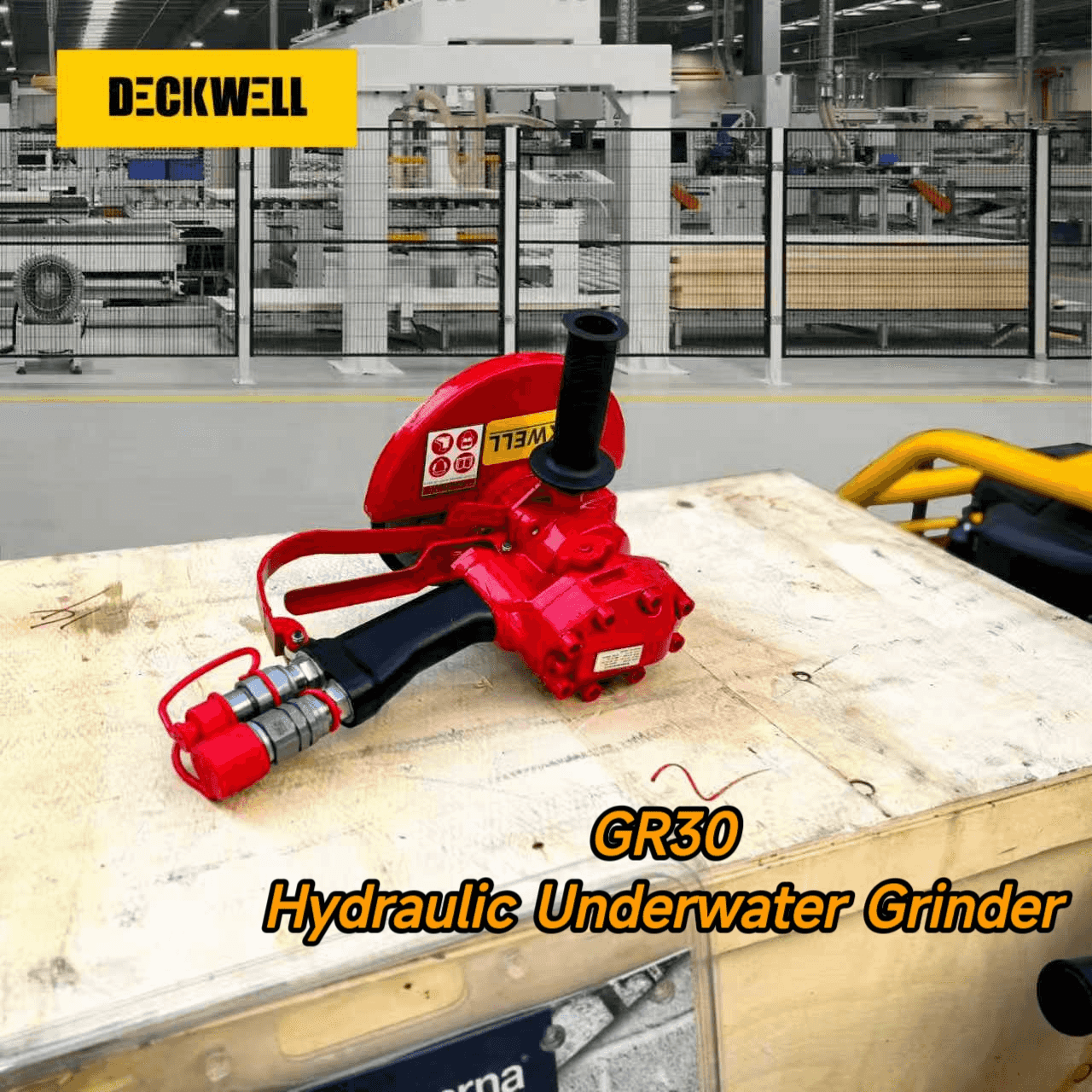
Core Performance Requirements for Underwater Hydraulic Tools
Pressure Resilience and Efficiency Retention at Extreme Depths
Underwater hydraulic tools must maintain structural integrity and operational efficiency under crushing pressures—over 30 MPa (4,350 psi) at 3,000 meters, equivalent to an elephant balancing on a postage stamp. At such depths, standard hydraulic systems suffer up to 60% power transfer loss without purpose-built adaptations. Critical design responses include:
- Pressure-balanced pistons, which equalize fluid pressure across dynamic seals to prevent extrusion and seal failure
- Precision bore/piston clearances held to ±0.02 mm to ensure consistent volumetric efficiency
- Multi-stage compensators, dynamically offsetting thermal and compressive fluid volume changes
Finite Element Analysis (FEA) validates structural reinforcements—such as variable-thickness pressure housings—that preserve torque output and response fidelity even in abyssal trenches.
Seal Integrity, Corrosion Resistance, and Thermal Stability in Seawater
Marine environments impose a triple threat: saltwater corrosion, abrasive sediment, and thermal shocks ranging from near-freezing deep-sea temperatures to warm surface conditions. Mitigation relies on integrated material and fluid engineering:
| Defense Mechanism | Function | Material Example |
|---|---|---|
| Multi-stage sealing | Prevents seawater intrusion under pressure | TPU primary + NBR backup seals |
| Corrosion-resistant alloys | Resists pitting and galvanic electrolysis | Super duplex stainless steels |
| Thermal-stabilized fluids | Maintains viscosity across -2°C to 50°C | Synthetic ester-based oils |
Saltwater accelerates wear eightfold compared to freshwater—making ISO 5597:2018-compliant sealing non-negotiable. Thermal cycling tests confirm stabilized fluids retain viscosity within ±5% across operational gradients, preventing cavitation and ensuring responsive actuation.
Key Underwater Hydraulic Tools by Marine Application
Marine operations demand precision, reliability, and brute force—all delivered by purpose-engineered hydraulic tools operating in extreme conditions.
ROV-Integrated Tools: Torque Wrenches, Manipulator Actuators, and Shear Rams
Remotely Operated Vehicles (ROVs) depend on pressure-compensated hydraulic systems for intervention tasks beyond 3,000 meters. These include:
- Torque wrenches, calibrated to maintain bolt preload integrity during subsea structure assembly
- 7-axis manipulator actuators, enabling dexterous object retrieval in high-current zones
- Shear rams, delivering 50-ton cutting force for emergency pipeline isolation
All leverage balanced hydraulics to sustain power density and prevent seawater ingress despite wide thermal swings.
Subsea Production & Intervention Tools: Valve Operators and Pipeline Connectors
Hydraulic valve operators provide fail-safe flow control in production trees and manifolds, rated for 15,000 psi working pressure. Pipeline connectors use synchronized dual-circuit hydraulics to achieve:
- Metal-to-metal sealing integrity on uneven seabed terrain
- Remote alignment of 24-inch risers within ±2 mm tolerance
- Zero-leak performance for 25+ years—even in H₂S-rich, sour-service environments
Trenching and Dredging Systems: High-Force Hydraulic Thrusters and Blade Actuators
Seabed preparation tools overcome dense sediments and volcanic soils using robust dual-circuit hydraulics:
- Jet trenching systems, fluidizing rock strata with 500-bar water jets
- Plough actuators, generating over 200 tons of linear force for cable burial
- Dredge cutter heads, sustaining constant torque via adaptive pressure compensation
Multi-stage filtration ensures 92% operational uptime despite abrasive particulate exposure—critical where maintenance windows are rare and costly.
The weight-to-power efficiency of underwater hydraulic tools remains unmatched for deep-sea applications, where electrical alternatives face prohibitive voltage drop and power transmission losses.
Critical Enabling Components for Reliable Underwater Hydraulic Tools
Compensators, Pressure-Balanced Pistons, and Filtration for Contaminant Control
Reliability at depth hinges on three interdependent components:
- Pressure compensators, which automatically balance internal hydraulic pressure against external hydrostatic load—preventing housing collapse at 3,000+ meters
- Pressure-balanced pistons, eliminating differential forces across dynamic seals to prevent extrusion under >4,500 psi seawater pressure
- Multi-stage filtration systems, capturing 98% of particles down to 3 microns; magnetic filters trap ferrous wear debris, while dehydration units remove moisture ingress
When it comes to subsea hydraulics, contamination remains the biggest headache for engineers. According to research published last year in the Offshore Technology Journal, around three quarters of all system failures can be traced back to dirty fluids filled with particles. The numbers get even more interesting when looking at dredging operations where silt levels run high. Companies using better filtration systems report doubling their maintenance schedules in these tough conditions. A recent industry report from 2024 makes this point clearly enough: keeping particles out of hydraulic systems significantly increases how long equipment runs before breaking down. And this matters a lot in offshore settings where sending ships out for repairs costs millions each time something goes wrong underwater.
Why Hydraulic Power Dominates for High-Force Underwater Tools
When it comes to underwater operations that require serious force, hydraulic systems are basically the go-to solution because they pack so much power into small spaces, handle tough environments well, and keep working consistently over time. The way pressurized fluids generate massive forces within these tightly packed, sealed units works really well for equipment down where space is at a premium. Electric and pneumatic systems just can't match what hydraulics do when facing constant heavy loads or dealing with pressure changes below 3,000 meters depth. Special coatings on the housing materials stop saltwater from getting inside, and there are clever design features that balance out the surrounding pressure. For things like connecting pipelines deep beneath the ocean surface, cutting through obstacles with shear rams, or operating valves thousands of feet underwater, nothing beats the combination of brute strength, quick response times, and dependable performance that hydraulic tech brings to the table.
FAQ
What are the primary challenges faced by underwater hydraulic tools?
Underwater hydraulic tools face challenges such as extreme pressure resilience, efficiency retention at depth, seal integrity, corrosion resistance, and thermal stability in harsh marine environments.
What makes hydraulic systems more suitable for deep-sea applications compared to electric or pneumatic systems?
Hydraulic systems pack significant power into compact spaces and offer better handling of continuous heavy loads and pressure changes below 3,000 meters depth. Their reliability and power density are unmatched for high-force underwater operations.
How do hydraulic tools maintain efficiency under extreme pressure?
Hydraulic tools utilize pressure-balanced pistons, precision bore/piston clearances, and multi-stage compensators to maintain efficiency and structural integrity under extreme pressure.
What materials are used to enhance seal integrity and prevent corrosion in seawater?
Materials such as multi-stage sealing with TPU primary and NBR backup seals, super duplex stainless steels, and synthetic ester-based oils are used to enhance seal integrity and prevent corrosion.
Why is contamination control critical for underwater hydraulic tools?
Contamination control is essential because dirty fluids filled with particles are a major cause of system failures. Efficient filtration systems significantly increase equipment lifespan and reduce costly offshore repair interventions.
Table of Contents
- Core Performance Requirements for Underwater Hydraulic Tools
- Key Underwater Hydraulic Tools by Marine Application
- Critical Enabling Components for Reliable Underwater Hydraulic Tools
- Why Hydraulic Power Dominates for High-Force Underwater Tools
-
FAQ
- What are the primary challenges faced by underwater hydraulic tools?
- What makes hydraulic systems more suitable for deep-sea applications compared to electric or pneumatic systems?
- How do hydraulic tools maintain efficiency under extreme pressure?
- What materials are used to enhance seal integrity and prevent corrosion in seawater?
- Why is contamination control critical for underwater hydraulic tools?