
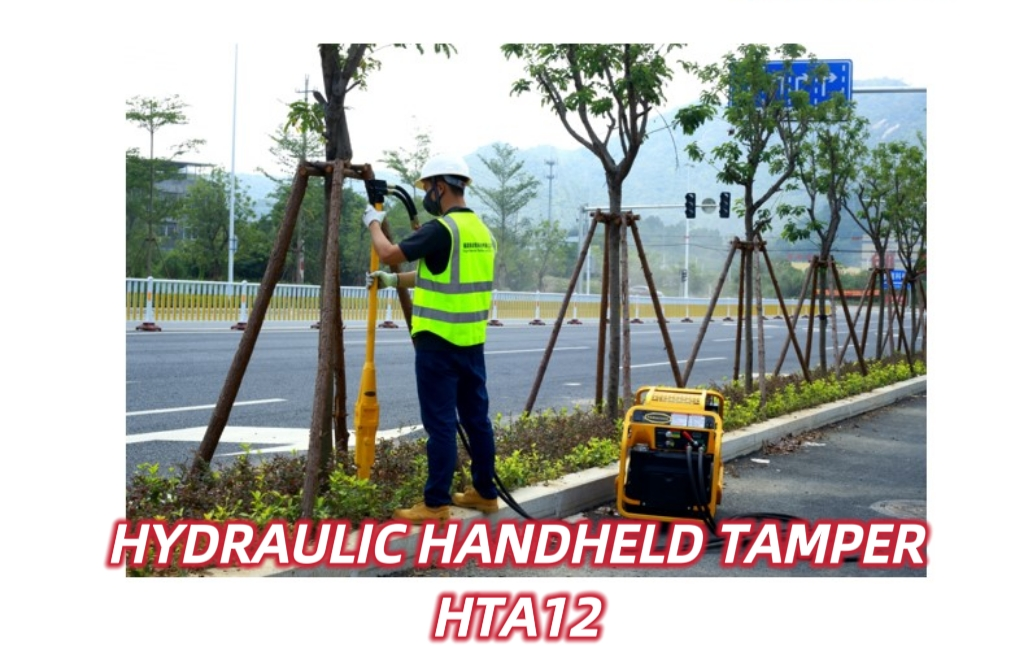
The Critical Role of Hydraulic Tamper in Modern Road Construction
Rising Demand for Efficient Compaction in Road Construction
Road construction projects now require 23% faster completion timelines compared to pre-pandemic benchmarks (NSSGA 2023), driving demand for equipment that combines speed with precision. Hydraulic tampers meet this need by delivering 98% soil density compliance in base layer preparation—essential for preventing pavement failure.
How Hydraulic Tamper Enhances Compaction Efficiency and Performance
Hydraulic tampers apply vertical impact forces up to 3,500 lbf, compacting irregular soil profiles in just 2–3 passes instead of the 5–7 required by traditional rollers. This reduces fuel consumption by 18% per square meter while achieving optimal void ratios for asphalt adhesion.
Case Study: Hydraulic Tamper Use in Soil Compaction on Highway Projects
A 14-mile highway expansion in Ohio used hydraulic tampers to stabilize sandy-clay subgrades prone to rutting. The system achieved 95% relative compaction in 72 working hours—40% faster than vibratory plate methods—while maintaining less than 1.5% density variation across lanes.
The Shift Toward Mechanized Solutions in Road Pavement Compaction
Eighty-five percent of DOT contractors now mandate hydraulic attachments for shoulder work and bridge approaches (ARTBA 2024). This shift reflects their ability to operate within 6-inch clearances—impossible for standard rollers—while reducing labor costs by $42/hour through automation.
Integrating Hydraulic Tamper into Standard Paving Workflows
Leading contractors integrate hydraulic tampers using three key practices:
- Pre-compaction soil moisture analysis (±2% tolerance)
- Impact frequency adjustments (1,200–2,800 bpm) based on lift thickness
- Real-time density monitoring via GPS-enabled compaction meters
This approach reduces rework rates by 67% in freeze-thaw regions compared to manual methods.
Superior Compaction Performance: Achieving Optimal Soil Density with Hydraulic Tamper
Efficient Compaction with Fewer Passes Due to High Impact Force
Hydraulic tampers deliver up to 3,550 lbs/ft of concentrated force, reducing required passes by 30–40% compared to manual methods. This enables rapid particle rearrangement, achieving 95%+ Proctor density in cohesive soils with only 2–3 cycles. Direct hydraulic power transfer minimizes energy loss, sustaining performance even in dense clay or granular base layers.
Vibration Dynamics and Soil Interaction for Uniform Results
Advanced systems optimize vibration amplitudes between 25–35 Hz to create cascading particle settlement. This range balances vertical displacement and horizontal shear, eliminating soft spots in trenches and subgrade interfaces. Real-time load-sensing technology adjusts plate oscillations to material resistance, ensuring consistent compaction force across variable conditions.
Matching Vibration Frequency to Soil Type for Optimal Density
When it comes to granular soils, they tend to achieve maximum density around 28 to 32 hertz as the vibrations actually make the particles flow like a liquid. Cohesive soil layers work differently though, needing frequencies between 18 and 22 hertz to deform plastically without creating cracks on the surface. Modern hydraulic tampers that can modulate their frequency follow ASTM D7382 guidelines, delivering impacts at about 1,200 to 1,500 beats per minute for sandy materials compared to roughly 800 to 1,000 BPM for those tricky silty clay mixtures. The right compaction rates help avoid problems with frost susceptible soils getting too dense, and generally maintain at least 90 percent density across different kinds of earth materials during construction projects.
Hydraulic System Efficiency: Power Delivery and Energy Advantages
Reducing Energy Loss in Hydraulic vs. Mechanical Systems
Hydraulic tampers reduce energy dissipation through optimized fluid dynamics, achieving 32% lower power loss than mechanical gear-driven systems. By replacing physical linkages with pressurized oil flow, they eliminate friction points that waste energy in conventional compactors.
Direct Power Transfer and Consistent Force Output
Sealed hydraulic circuits deliver 98% of input energy directly to the compaction surface via uninterrupted fluid pressure. This ensures uniform impact force across varying soil conditions, essential for meeting roadway density specifications.
Case Study: Fuel Efficiency in Continuous Tamper Use for Soil Compaction
A 12-month evaluation of highway projects showed hydraulic tampers reduced fuel consumption by 17% compared to conventional methods. Adaptive flow control systems recovered 23% of deceleration energy during idle periods while maintaining required compaction forces, as detailed in the 2023 Construction Efficiency Report.
Advancements in Sealing and Flow Control Technology
Multi-stage filtration systems and pressure-compensated valves reduce internal leakage by 41%, extending component life and preserving hydraulic response times. These innovations support sustained efficiency during multi-shift paving operations.
Maintenance Protocols to Sustain Hydraulic Efficiency
Fluid analysis every 500 operating hours prevents viscosity breakdown, ensuring stable power transmission. Combined with contamination monitoring, these protocols reduce unscheduled downtime by 28% in high-use environments.
Smart Hydraulics and Adaptive Performance in Real-World Conditions
Managing Variable Load Conditions in Road Pavement Compaction
The hydraulic tampers we see today can actually adjust themselves when they hit different types of soil or rough ground because they get instant info from those ground penetration sensors built into them. When working on areas where there's both clay and gravel, these newer models will tweak their pressure somewhere between 15 and maybe even 40 psi so everything gets packed evenly without crushing the softer parts underneath, according to what Road Engineering Journal reported last year. What makes this feature really important is that it stops those pesky soft spots from forming beneath roads. We know from experience that around a quarter of all road failures happen exactly where these weak spots develop at transition points.
Real-Time Adjustment via Smart Hydraulics and Load-Sensing Technology
IoT-enabled load sensors and pressure transducers update 120 times per second, enabling predictive algorithms to anticipate resistance changes. Hydraulic flow rates adjust within 0.8 seconds of detecting material variations. During a 2022 airport runway project, this technology reduced manual calibration checks by 62% while achieving 99.4% density compliance across 14 soil types.
Case Study: Automated Pressure Modulation in Mixed-Soil Zones
On a highway expansion through glacial till deposits, the tamper’s control system identified seven distinct soil zones across 3.2 miles, autonomously switching between 28 kN and 41 kN impact forces. This eliminated trial-and-error testing, completing compaction 30% faster than conventional methods with ±1.2% density variance between zones.
Cost vs. Long-Term ROI of Intelligent Hydraulic Systems
While smart tampers carry an 18–25% upfront cost premium, they deliver measurable savings:
| Metric | Standard Tamper | Smart Hydraulic Tamper |
|---|---|---|
| Fuel Consumption | 9.2 L/hour | 7.1 L/hour (-22%) |
| Daily Coverage | 850 m² | 1,150 m² (+35%) |
| Re-work Rate | 6.8% | 1.1% |
Data from a 12-month municipal road program showed full ROI within 14 months due to lower fuel and labor costs.
Phased Adoption of Smart Systems in Public Infrastructure Projects
Transportation departments across the country are slowly getting on board with these new smart tampers. Take the Midwest Infrastructure Alliance for example they started rolling out their three phase plan back in 2021 and by 2025 had managed to cut down project delays by almost half once they got those adaptive hydraulics installed on about 40% of their equipment. The folks who jumped in early are seeing something pretty impressive too around 45% less need for manual adjustments when things get complicated. Makes sense really since these machines work so well in those cramped city streets where traditional equipment just doesn't fit right.
Comparative Advantages and Durability of Hydraulic Tampers
30% Faster Compaction Cycles with Hydraulic Tampers
Field studies show hydraulic tampers complete tasks 30% faster than mechanical alternatives due to continuous force delivery and optimized strike rates (National Asphalt Pavement Association 2023). This eliminates repositioning delays common in roller-based workflows.
Roller vs. Hydraulic Tamper in Patchwork and Precision Scenarios
In confined repair zones under 15m², hydraulic tampers achieve 92% target density in two passes, whereas rollers require four to five. Articulated heads allow edge compaction within 10cm of obstacles, offering a critical advantage for utility trench reinstatements.
Impact Force Variability and Surface Uniformity Outcomes
Modern hydraulic tampers adjust impact energy from 500–2,200 Joules, preventing over-compaction in sensitive subgrades while maintaining ±1.5% density variance. Dynamic force control reduces surface wave distortions by 67% compared to static roller weights.
Design Features That Extend Service Life Under Heavy Use
Hydraulic tampers incorporate three durability-enhancing features:
- Hardened steel plungers with tungsten-carbide tips (3,500-hour service intervals)
- Shock-absorbing polymer mounts reducing frame stress by 40%
- Encapsulated valve blocks preventing particulate ingress
According to a 2023 heavy machinery maintenance analysis, these designs enable over 12,000 operating hours before major overhaul in road construction environments.
Construction Stress Factors in Road Compaction Environments
Continuous vibration accelerates wear in traditional compactors, but hydraulic tampers distribute operational stresses more effectively. Their dampened hydraulic circuits sustain less than 0.03% efficiency loss per 500 hours in high-dust environments, compared to 0.12% degradation in mechanical vibratory systems.
FAQ Section
What is a hydraulic tamper?
A hydraulic tamper is a construction tool used to compact soil efficiently in road construction, utilizing hydraulic power for optimal force and efficiency.
How does a hydraulic tamper improve road construction efficiency?
Hydraulic tampers apply vertical impact forces to compact soil layers more quickly, reducing fuel consumption and improving soil density compliance, resulting in faster road construction timelines.
Why is hydraulic compaction preferred over mechanical methods?
Hydraulic compaction is favored for its reduced energy loss, consistent force output, and ability to adjust to variable soil conditions, making it more efficient and precise than mechanical methods.
What are the benefits of smart hydraulic systems?
Smart hydraulic systems offer real-time adjustments and adaptive performance, reducing the need for manual calibrations, enhancing compaction precision, and cutting fuel and labor costs.
Table of Contents
-
The Critical Role of Hydraulic Tamper in Modern Road Construction
- Rising Demand for Efficient Compaction in Road Construction
- How Hydraulic Tamper Enhances Compaction Efficiency and Performance
- Case Study: Hydraulic Tamper Use in Soil Compaction on Highway Projects
- The Shift Toward Mechanized Solutions in Road Pavement Compaction
- Integrating Hydraulic Tamper into Standard Paving Workflows
- Superior Compaction Performance: Achieving Optimal Soil Density with Hydraulic Tamper
- Hydraulic System Efficiency: Power Delivery and Energy Advantages
-
Smart Hydraulics and Adaptive Performance in Real-World Conditions
- Managing Variable Load Conditions in Road Pavement Compaction
- Real-Time Adjustment via Smart Hydraulics and Load-Sensing Technology
- Case Study: Automated Pressure Modulation in Mixed-Soil Zones
- Cost vs. Long-Term ROI of Intelligent Hydraulic Systems
- Phased Adoption of Smart Systems in Public Infrastructure Projects
- Comparative Advantages and Durability of Hydraulic Tampers
- FAQ Section