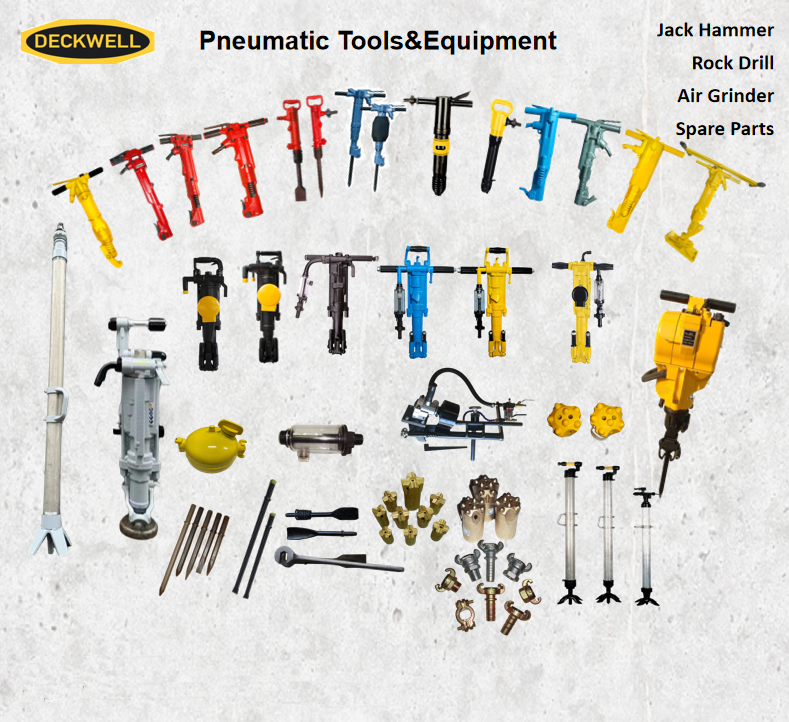
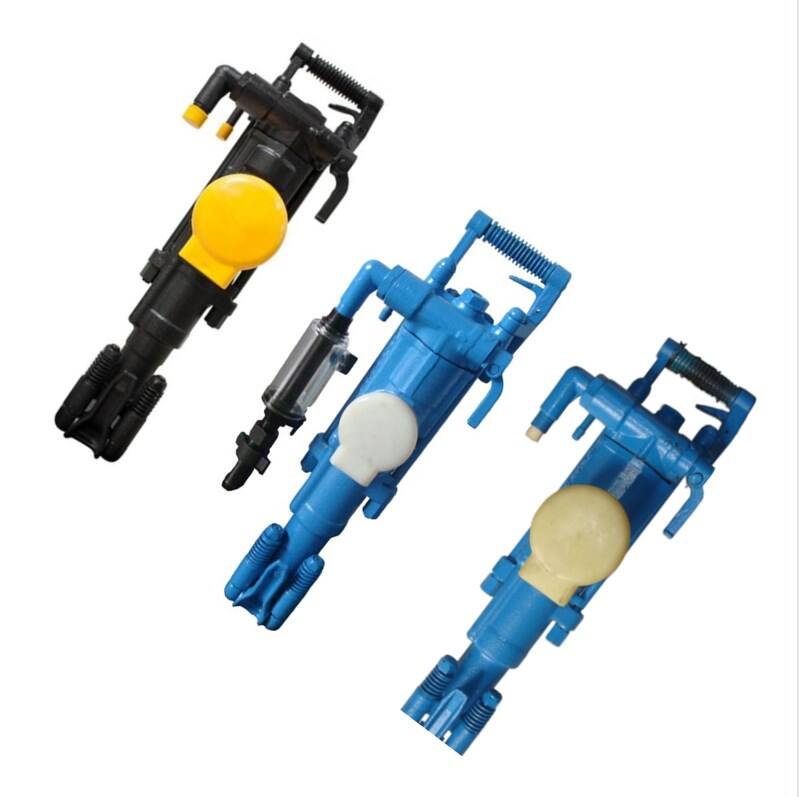
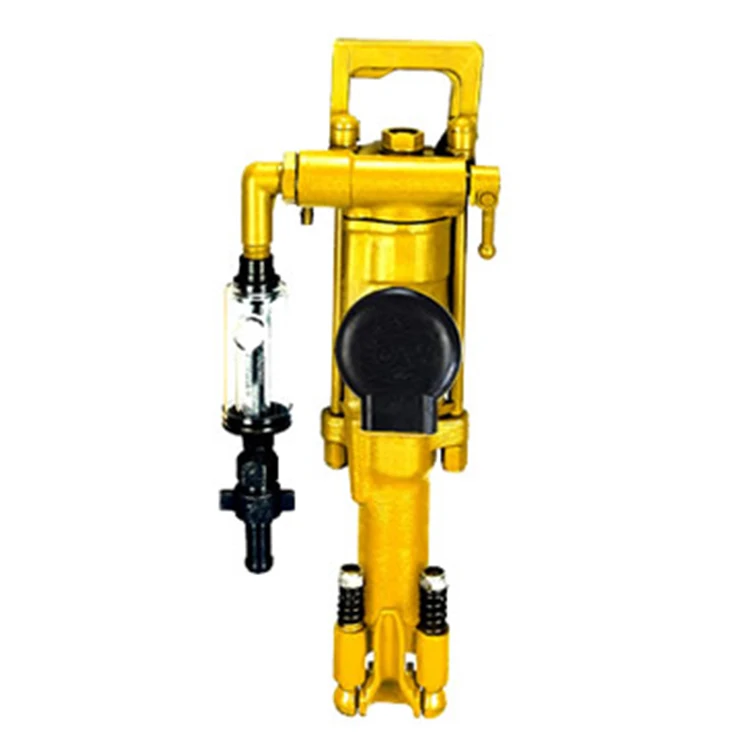
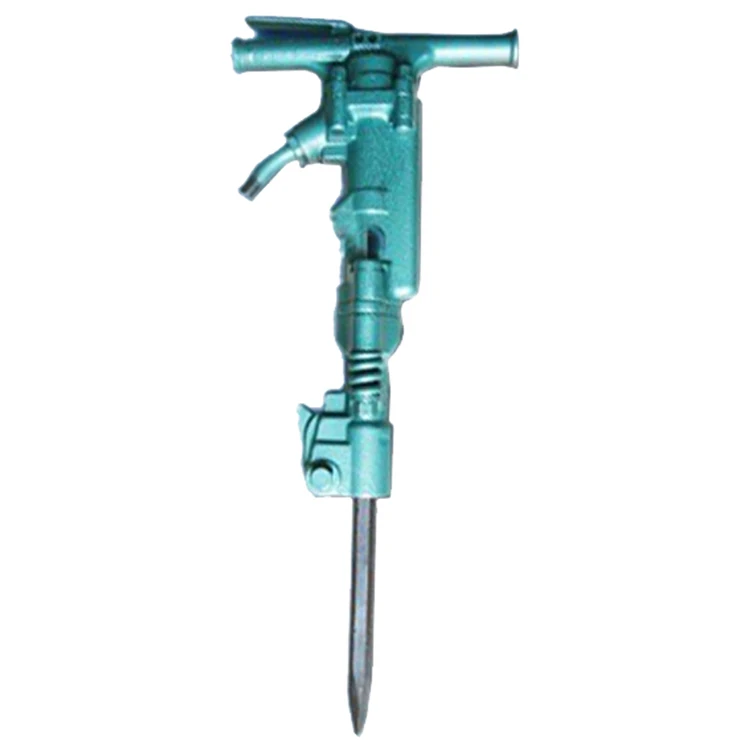
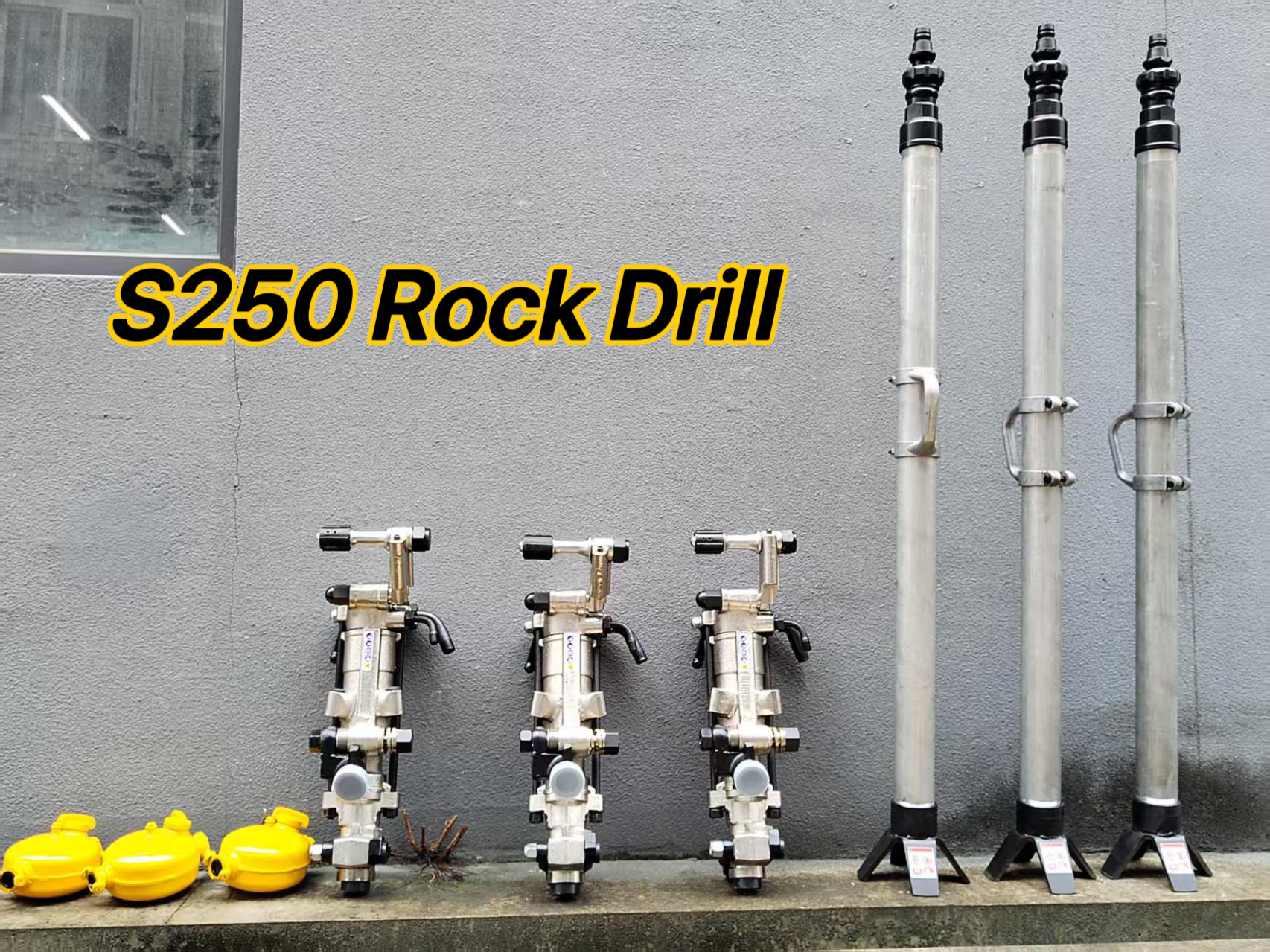
An air leg rock drill is a specialized pneumatic tool designed for efficient rock penetration in medium to hard formations, leveraging a combination of impact energy and automated feed to optimize drilling performance. The system comprises a hammer mechanism, which generates high-frequency blows through compressed air, and an air leg that functions as both a support column and a propulsion device. This dual-action design ensures that the drill bit maintains constant contact with the rock surface, reducing energy loss and improving hole straightness. The air leg, often constructed from lightweight aluminum or steel alloys, can be adjusted for length and pressure to suit varying ground conditions, while the drill itself features ergonomic handles and intuitive controls for operator safety. In underground mining, air leg rock drills are widely used for roof bolting, prospecting, and production drilling in low-headroom scenarios. For example, in coal mine roadways, these drills facilitate the installation of roof support systems by drilling holes for resin bolts, enhancing workplace safety against rock falls. A notable application in civil engineering involves slope stabilization along highways, where drills are employed to create holes for soil nailing or rock anchoring, preventing landslides and erosion. In municipal projects, such as sewer line installations through bedrock, the compact design of air leg drills allows for minimal disruption to urban infrastructure. A case study from a railway expansion project highlighted a 25% reduction in drilling time per meter when using air leg drills over conventional jackhammers, due to their superior feed control and reduced manual effort. The equipment's versatility extends to disaster response, where it can be deployed for rapid rock clearing in avalanche or earthquake-affected areas, enabling rescue teams to access trapped individuals. Key performance metrics include impact frequency, hole diameter capacity, and air pressure requirements, which influence the selection process for specific rock types like granite or limestone. To maximize longevity, operators should monitor air quality to prevent moisture ingress and regularly replace worn drill steels and bits. For projects with limited compressor capacity, low-consumption models are available to maintain efficiency without compromising power. We provide customized recommendations based on your operational environment; please reach out to us for technical data and pricing information tailored to your needs.