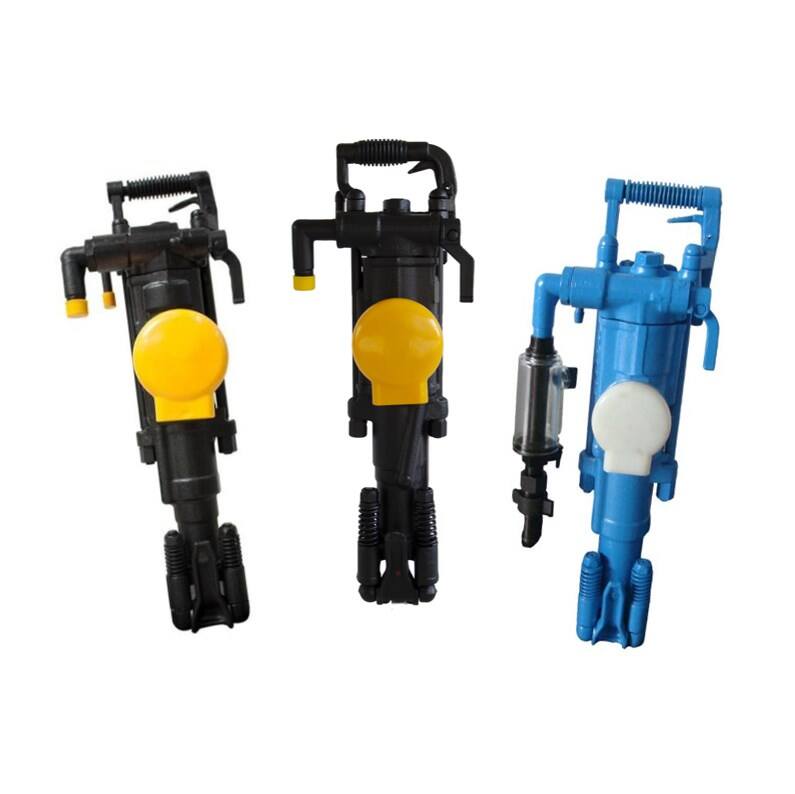
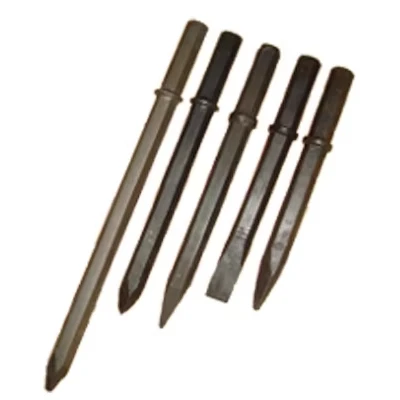
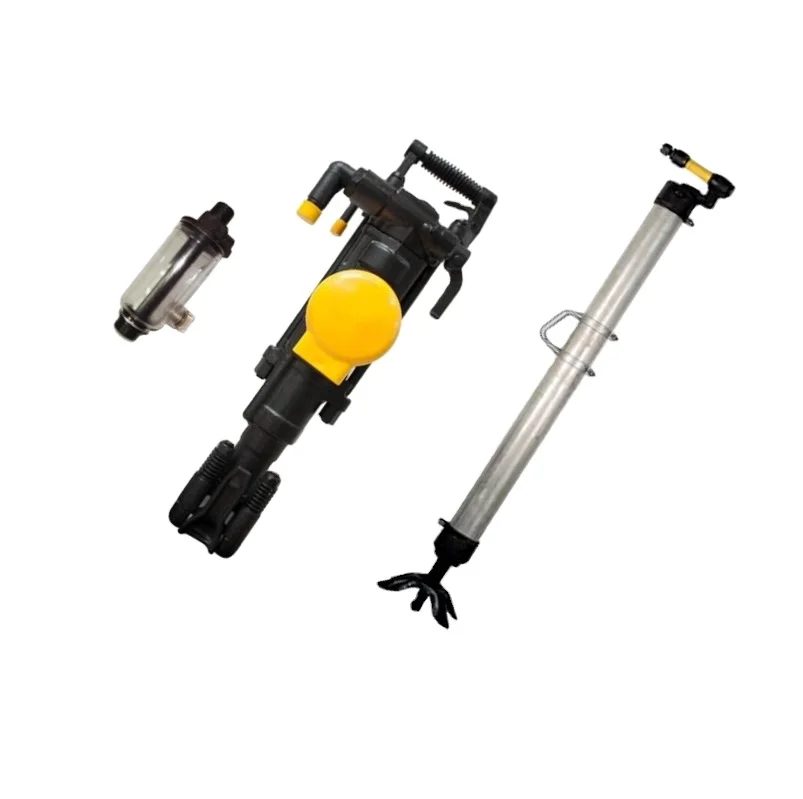
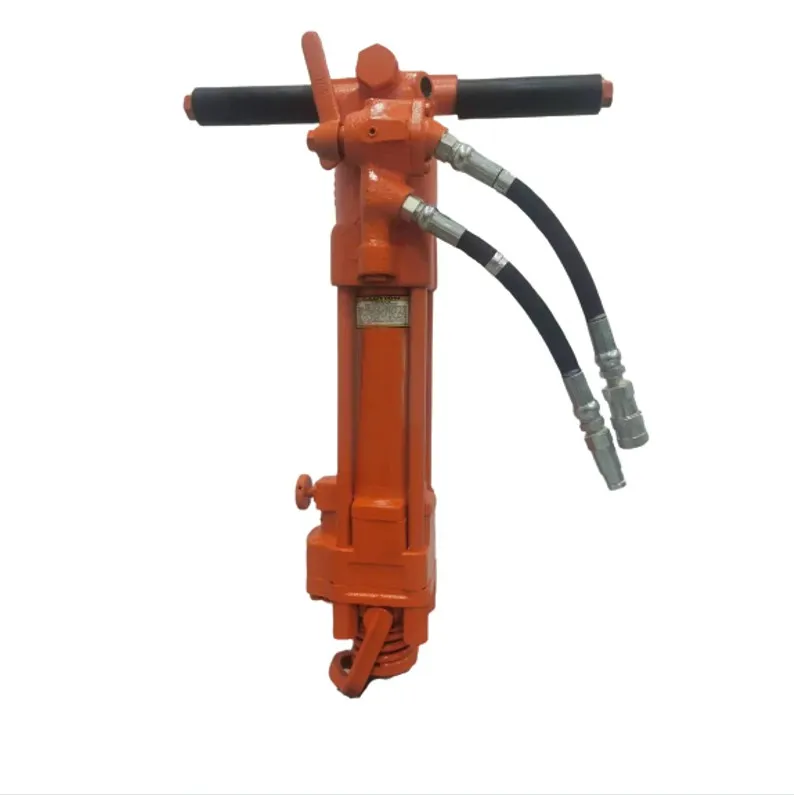
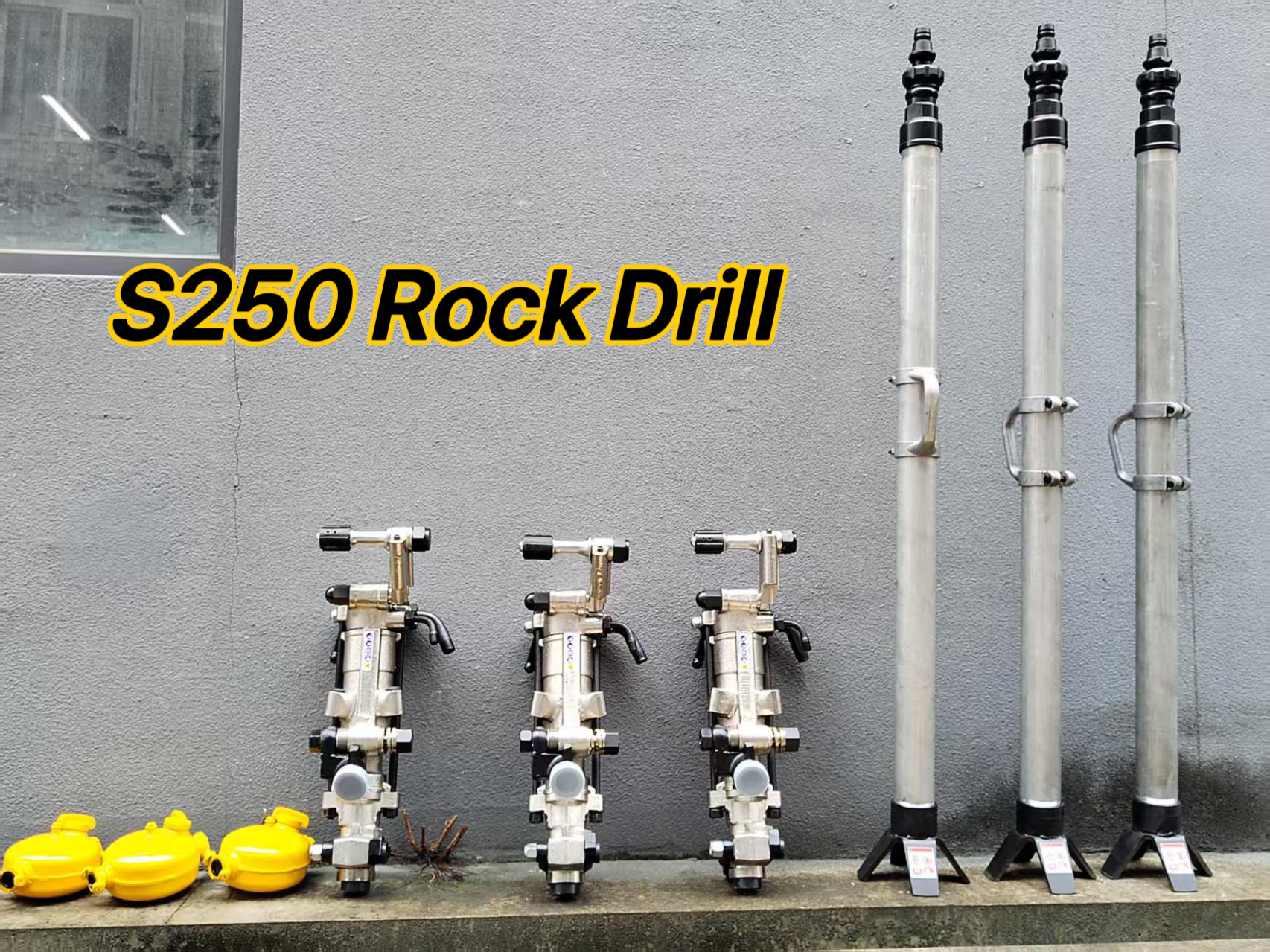
The air leg rock drill is a cornerstone equipment in rock drilling applications, merging percussive technology with ergonomic support to deliver high productivity in constrained spaces. Operating on pneumatic principles, the drill generates impact energy through a reciprocating piston, transmitting force to the drill bit via a shank adapter. Simultaneously, the air leg, attached to the drill body, exerts adjustable feed pressure to keep the bit engaged with the rock, minimizing bounce and maximizing penetration rate. This synergy allows for deeper and faster hole drilling than manual methods, with typical hole depths ranging from 1 to 6 meters depending on rock hardness. The tool's design often includes anti-vibration features and noise-reduction casings to protect operators during extended use. In construction, air leg rock drills are employed for rock splitting, foundation drilling, and trenching in rocky soils. For example, during bridge pier construction in riverbeds, these drills create holes for caisson sinking, with their air leg stability proving critical in uneven terrain. In mining, they are used for sampling, ventilation hole drilling, and ore extraction in narrow reefs, where their maneuverability outperforms larger equipment. A case study from a limestone quarry showed a 15% decrease in operational costs by switching to air leg drills, as they required fewer operators and less energy compared to electric alternatives. Municipal applications include drilling for utility poles in rocky ground or creating holes for blasting in urban redevelopment projects, minimizing disruption to surrounding areas. In emergency scenarios like rockfall clearance on highways, the quick setup of air leg drills enables rapid response, restoring traffic flow safely. Selection criteria for these drills involve assessing impact energy (measured in joules), air consumption (CFM), and leg stroke length to ensure compatibility with project specs. Routine upkeep includes cleaning air inlets, inspecting hoses for wear, and testing safety valves to prevent accidents. For high-altitude or cold-region operations, special lubricants and air dryers are recommended to avoid freezing. We invite you to contact our team for personalized advice on model selection, operational training, and after-sales support to optimize your drilling outcomes.