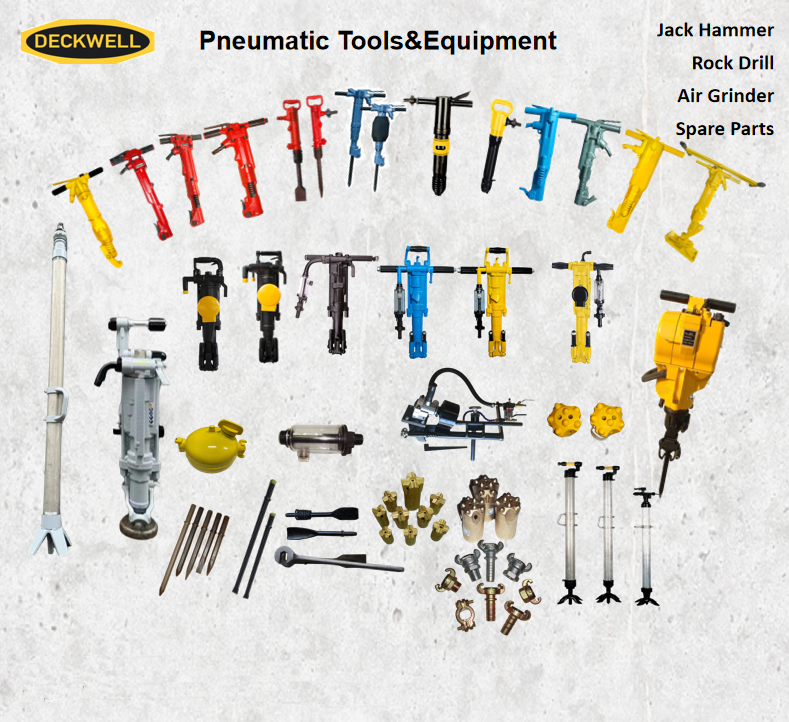
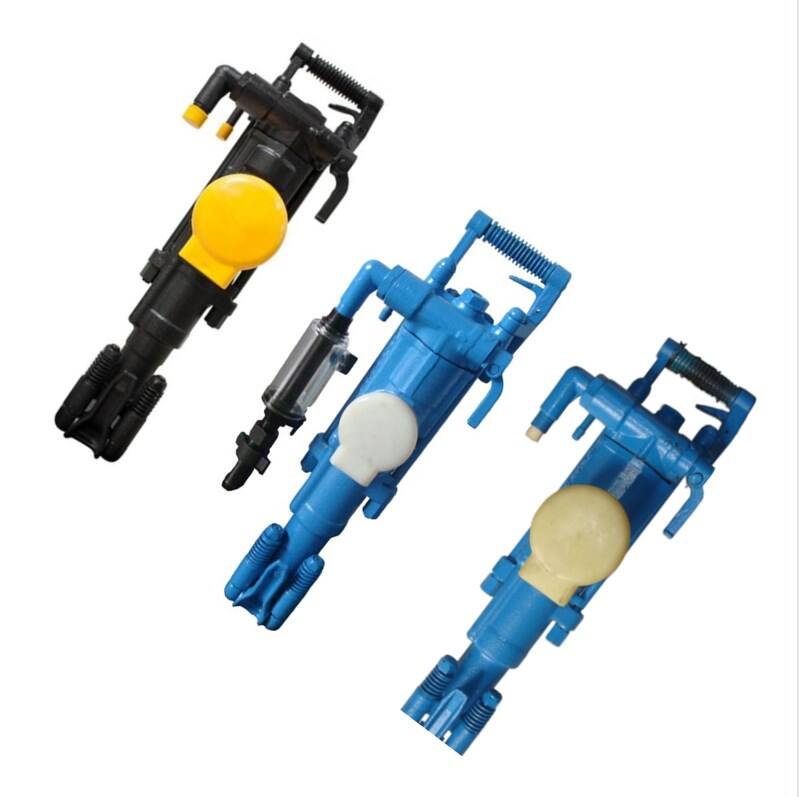
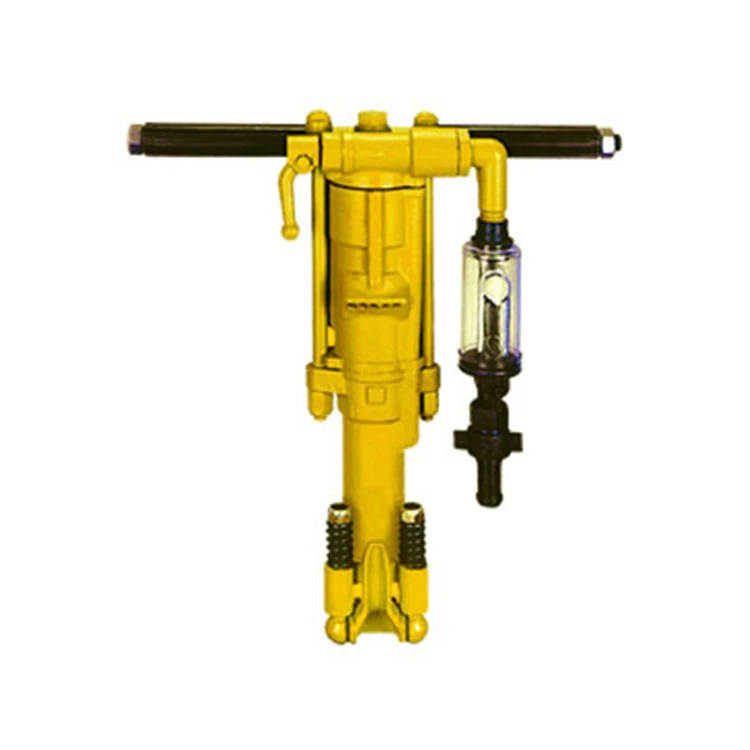
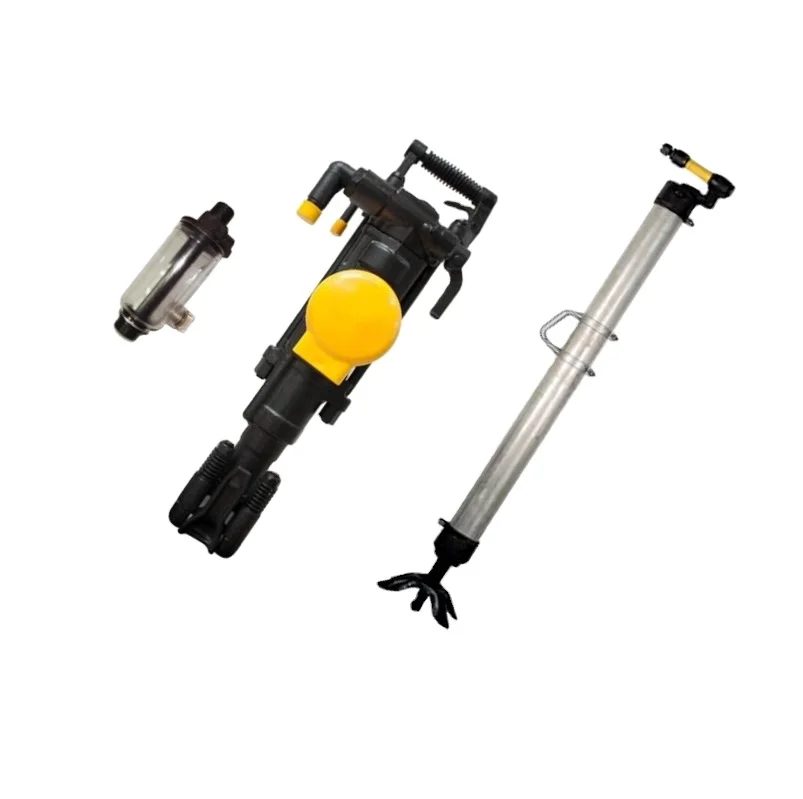
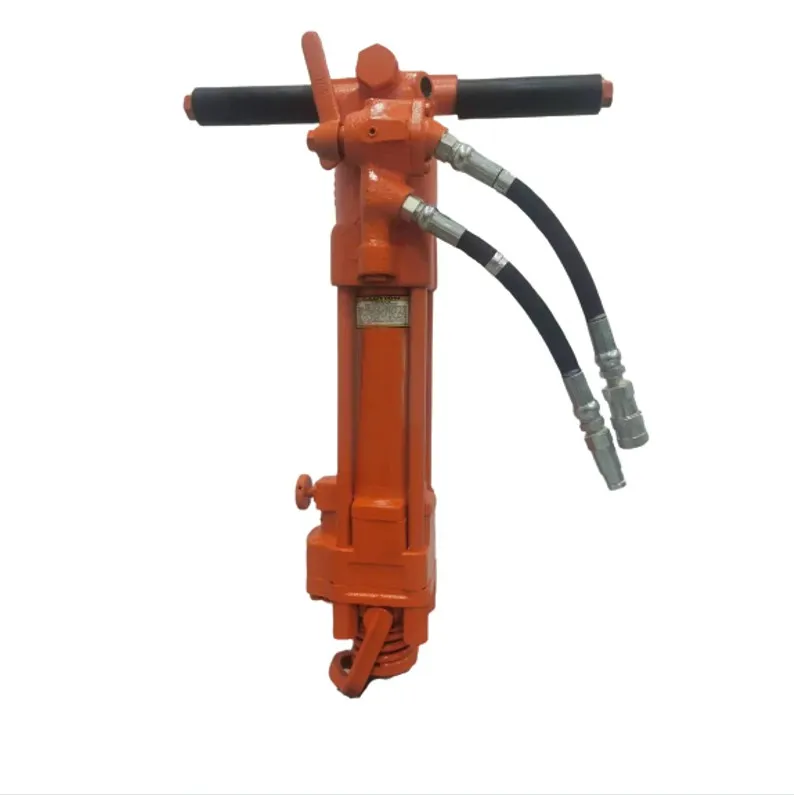
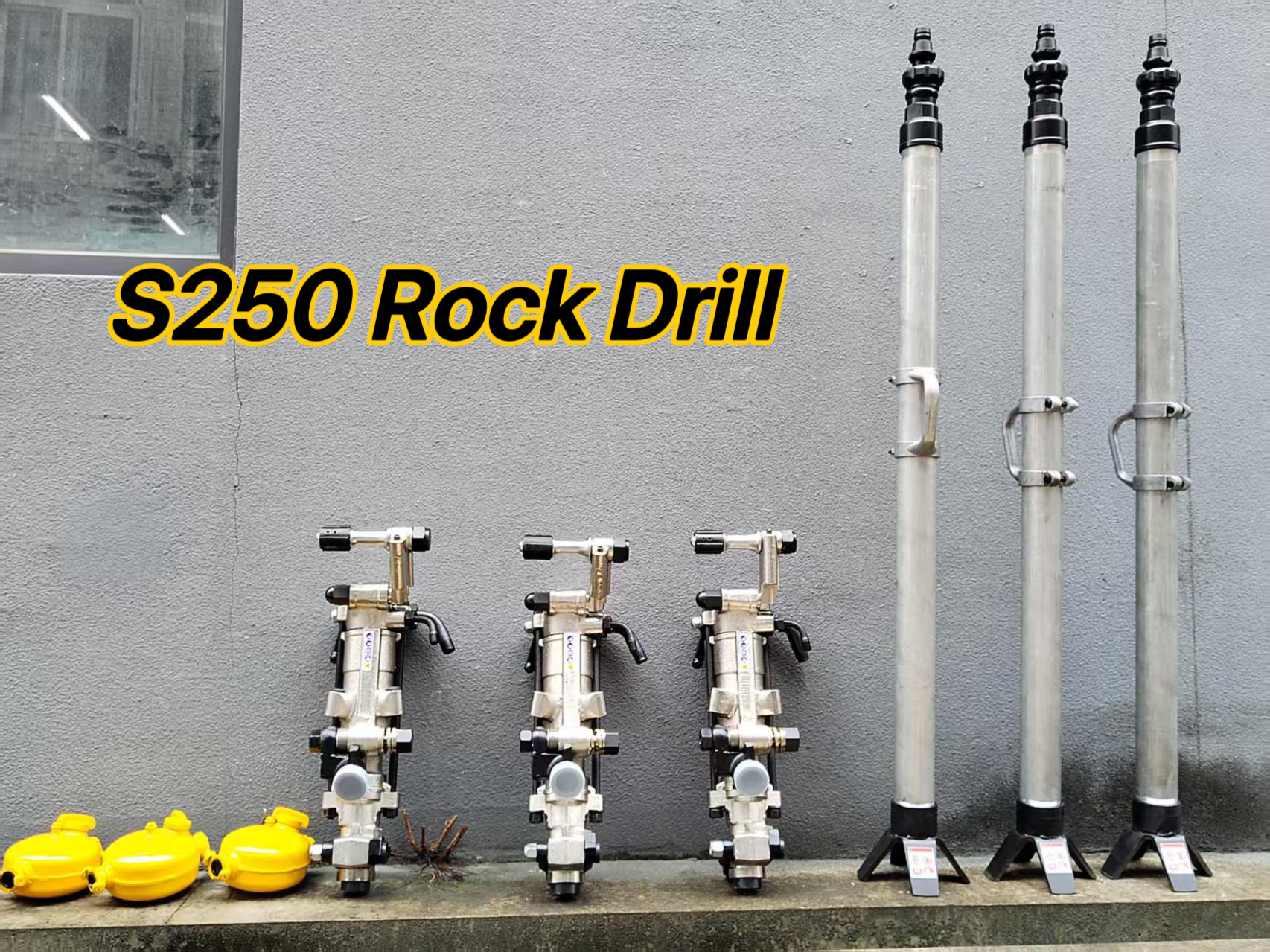
An air leg rock drill offers a practical approach to rock drilling by merging impact power with stabilized feed, resulting in enhanced efficiency and operator safety. The drill component uses compressed air to power a piston that strikes the drill steel, fracturing the rock, while the air leg applies forward force to maintain drilling progress. This setup minimizes physical strain and improves hole accuracy, especially in overhead or horizontal drilling. The tool's compact design allows for use in tight spaces, such as mine stopes or construction trenches, and its robust construction ensures reliability under heavy use. In mining, air leg drills are used for drilling charge holes in production faces or for rock reinforcement in weak zones. For instance, in a coal mine, their use for roof bolting improved safety by enabling faster support installation. In tunneling, they are employed for drilling blast holes in hard rock or for installing rock bolts in unstable sections. A case study from a railway tunnel project demonstrated a 25% improvement in drilling speed with air leg drills, reducing project timelines. Construction applications include drilling for foundation pins in rock or for soil investigation in rocky terrain. Municipal uses involve drilling for blasting in urban development or for geological sampling. In emergency response, such as rockfall on highways, the drills help clear debris quickly. Key selection factors include impact frequency, leg extension force, and air pressure requirements, which should match the rock hardness and hole depth. Maintenance involves cleaning the drill's air passages, checking leg seals, and storing the equipment properly. For environmentally sensitive sites, low-noise and low-emission models are available. To inquire about our products and services, please contact us for detailed information and support.