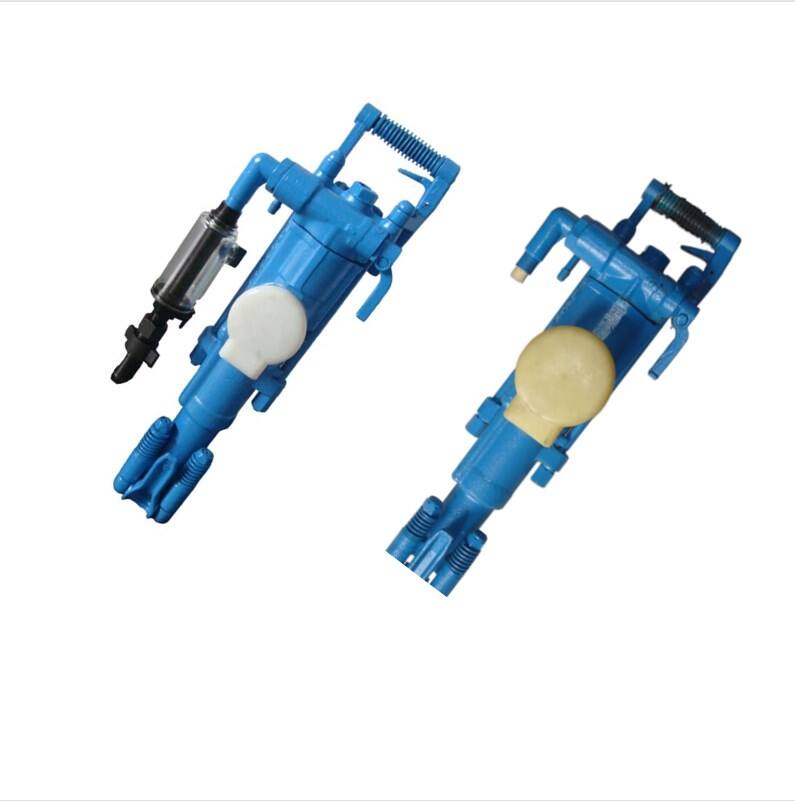
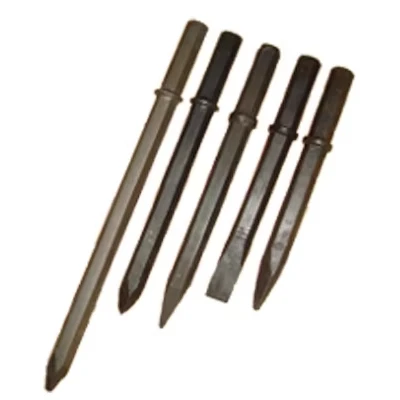
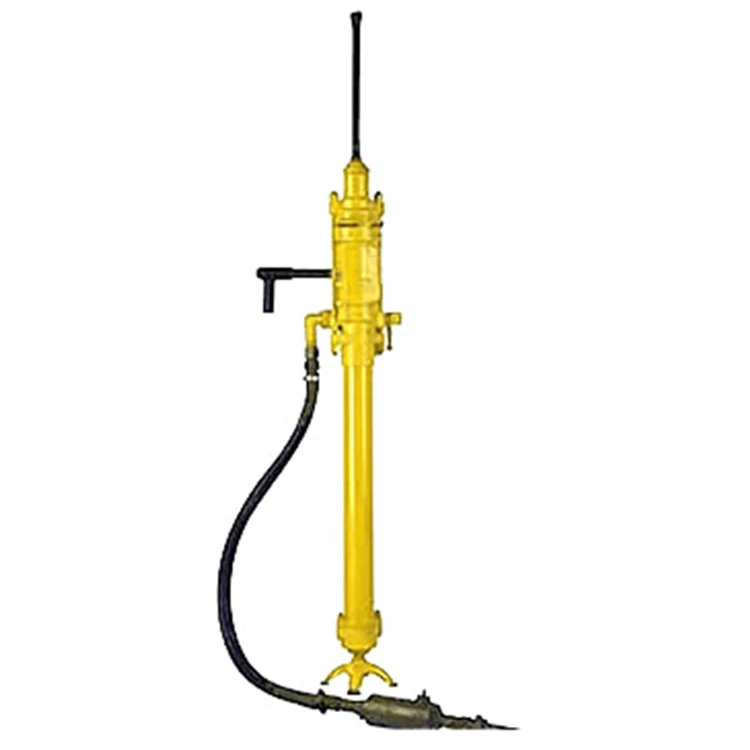
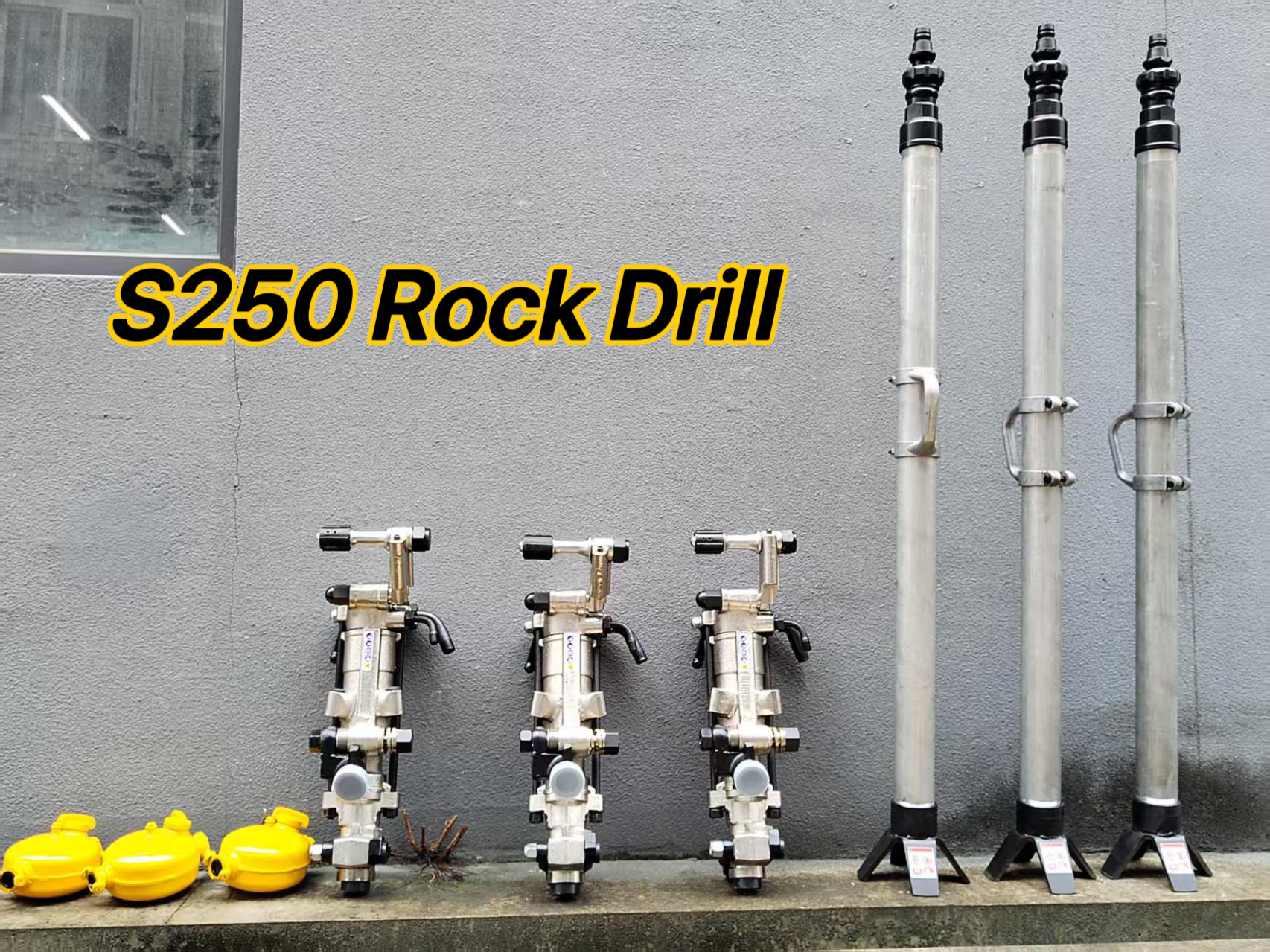
An air leg rock drill provides a efficient solution for rock drilling in various environments, leveraging pneumatic power to drive impacts and a feed leg to maintain drilling momentum. The drill component consists of a cylinder and piston assembly that converts air pressure into mechanical blows, transmitted to the drill bit via a shank. The air leg, typically a pneumatic cylinder, applies forward force to the drill, reducing the need for manual pushing and enabling longer drill strokes. This makes the tool ideal for applications like mine development, where space is limited, and rock hardness varies. In quarrying, air leg drills are used for secondary drilling, hole cleaning, or drilling for splitting tools. For example, in a sandstone quarry, operators reported a 20% increase in daily footage with air leg drills due to reduced downtime from bit jamming. In construction, they facilitate drilling for rock anchors in slope stabilization or for foundation holes in bedrock. A case study from a tunnel project in soft rock showed a 25% improvement in drilling consistency with air leg drills, ensuring uniform blast results. Municipal applications include drilling for street furniture in rocky areas or for geological survey holes. In disaster response, such as landslide clearance, the drills help break large rocks into manageable pieces. When selecting an air leg rock drill, consider impact energy, leg force, and compatibility with existing air compressors. Maintenance includes inspecting the drill's front head for damage, greasing the leg mechanism, and using sharp bits to maintain efficiency. For noisy urban sites, models with mufflers are available to reduce sound levels. We offer tailored advice and products to meet your drilling challenges; contact us for specifications and pricing details.